Thursday, August 9, 2012

French – Thai Fusion Tart by Eric Kayser. Intellectual Masturbation.

I came to Paris for a couple of weeks, but not really on holiday. But still I have some time to visit my favorite places, bakery shops, book stores and neighborhoods. One of them is the Asian quarter in the 13th arrondissement - despite the fact that it is so little French. I call it the “guts” of Paris. For those who live in huge agglomerations like London or New York City maybe it will not be impressive. But for a girl from Kraków, where the access to fresh, authentic Asian ingredients is still difficult (in particular, fresh exotic vegetables, dried seafood and fresh exotic fruits) visiting Avenue d’Ivry and its surroundings is a must. 


This neighborhood seems far away from France elegance. Located in the south-east of the city, tall and slim buildings resemble rather Hong-Kong residential areas built in the 50s for immigrants than chic Parisian residential houses.


As I found out here “…the today’s Parisian Chinese – Vietnamese quarter is an urban development of high-rise housing from the end of the 1960s. Each tower is over 100 metres high with 36 floors. Built to bring young, dynamic businessmen to the area, it was not a success and most of the flats remained empty until around 1975 when Vietnamese immigrants started to rent them, usually sharing with many others to cover the high rent. And that’s how the Chinese quarter of Paris was born. The area with its crumbling concrete and grimy shopping centres (more on those later) can make it seem quite an austere place. Thank goodness that the Asian community moved in and turned this inhabitable wasteland into a thriving area…..Tang Brothers placed their huge supermarket here (avenue Ivry) and have gone on to become the largest importers of Asian food in Europe. Perhaps that’s why they were so snotty about letting me take photos in there?...”


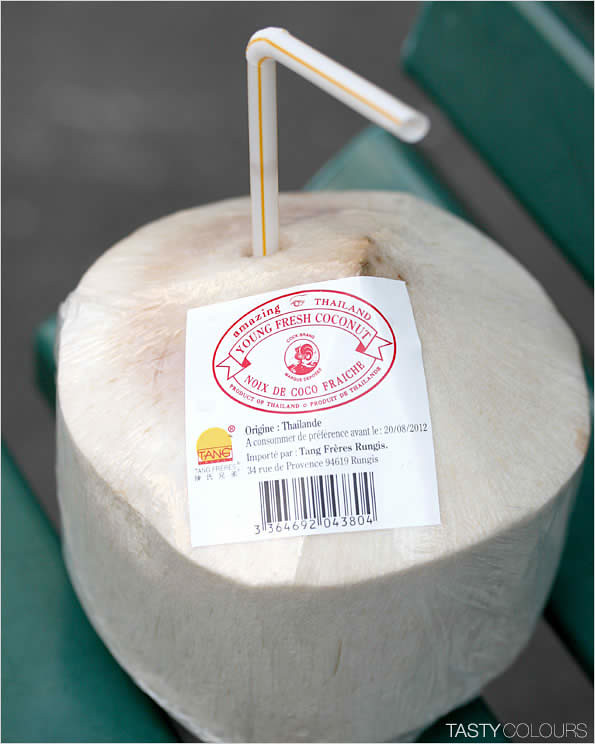
In the neighborhood (most notably, Avenue d’Ivry) one will find more grocery stores and authentic Thai, Vietnamese, Laotian, Cambodian and Chinese restaurants, where both the owners and waiters barely speak French. The same concerns sales persons in the Tang Frères supermarket – where none of them hardly say anything more than bonjour. However, one will not find so many Japanese and Korean restaurants (and if yes, probably they will be conducted by Vietnamese / Chinese). As I mentioned HERE, the Japanese / South Korean Community resides close to Opéra quarter, in the 1st arrondissement. Anyway, for those who love Asian cooking, visiting the Tang Frères supermarket is a must. It is not a small grocery store, but quite a spacious supermarket where durian fruits emit a rather noticeable and persistent smell. You will find everything, or nearly everything that is necessary for authentic Far East cuisine - including dried fish and seafood as well as strange vegetables, greens, and leaves – imported straight from Asia and transported by huge jumbo jets every day. 
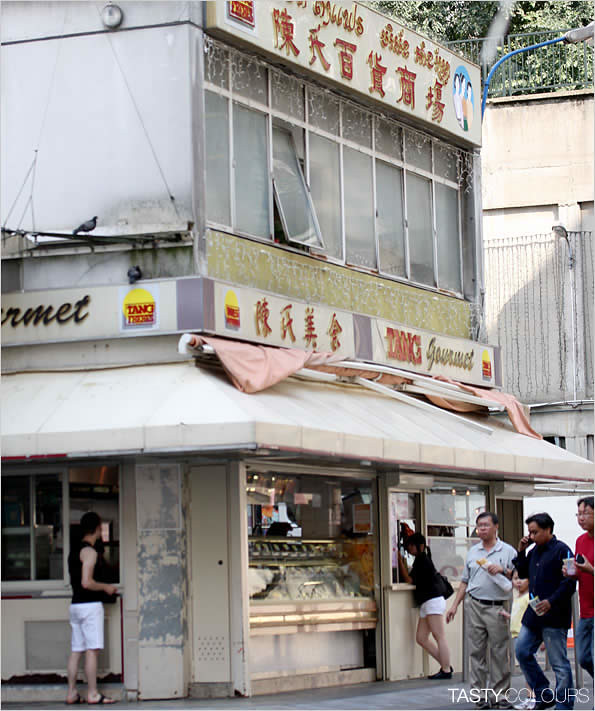


It is probable the only neighbourhood in Paris where it is possible to buy green papayas and green mangos for savory salads and at the same time the ripest sweet mangos. I am always surprised by the various types of those mangos ranging from 5 to 15 Euro per kilo, imported straight from Thailand, Pakistan, India or Morocco, and also by their taste – since then I do not buy mangos elsewhere (especially not in Poland). Despite the fact that their prices raised significantly over the last 5 years, Tang Frères is still reasonably priced.


My husband is an expert in French breads and he is of the opinion that the Polish do not know how to bake good ones. I am rather of the opinion that he is some kind of a nationalist attached to French breads and baguettes. Of course that baguettes taste the best in France like Polish sour rye bread tastes the best in Poland. It is like comparing Italian pizza dough and French pâte sablée or pâte brisée. Two different stories. Although, on the other hand, it is true that, in general, the quality of bread in Poland decreases. In Paris, one of our favorite bakeries, since a certain while, is Maison Eric Kayser. Eric Kayser has several locations in Paris (for example, rue du Bac in the 7th – very close to the Seine river) and abroad (but not in Poland yet). Within the next few days Eric Kayser has just opened his first shop in New York City. Eric Kayser is a baker and a French pastry chef specializing not only in breads (for example, I recommend his buckwheat bread and buckwheat baguettes). Among other Kayser’s specialties are sweet and savory tarts and quiches. One can try them in his bakery shops. In 2006 the Flammarion Edition house published Kayser’s cook book “Les Tartes d’EricKayser” which, as many other cookbooks, remained untouched for some time on my bookshelf. This time, I took it with me to Paris.


I love tarts and I am very picky about them. I have a hard time to swallow those with a hard dough, which bottom is not crispy but gluey because the “appareil” or juices soaked into it. This is exactly how usually they are made in Poland, even in restaurants. That is why I very rarely order tarts in Poland, and sorry to say that – usually I am disappointed. A good tart is not difficult to make but it requires time and patience. And as a good pizza, a good tart does not need many ingredients – usually the lesser the better. Two – three ingredients of good quality and that’s it! And most importantly the dough should be crispy. When I see so-called “French tarts” made with too many ingredients, with no common sense and no thinking – like, for example, a mixture of Italian Parmiggiano and sun dried tomatoes, French camembert, scallions, ham, carelessly chopped tomatoes and God knows what else – I am really tempted to write to the author to say: Please do not call this “tart” a French one!

So, we like breads from Eric Kayser's and we love Thai food. I am not a great fan of fusion cooking and I am skeptical about cook books written by famous chefs. I am always afraid that they did not write their recipes on their own or that they did not check them in person, because simply they are too busy to do so. But this time I decided to make a fusion French-Thai tart with eggplant, chicken and green curry paste. And I must tell you – if I was not a tart maniac and if I did not check it out sentence by sentence, Eric Kayser"s recipe does not work out! First of all, the book does not indicate how deep the tart mold should be. The recipe calls for one square tart mold of 24 cm or a round one of 26 cm in diameter and 400 g of pâte brisée. This, in my opinion was way too much – I used around 220 grams for my tart (the rest for a second, smaller tart). Moreover, I added cold butter and I chopped it into sand and not at room temperature, as indicated in the book. I wanted my dough to be really sablée. Moreover, Eric Kayser in his book indicates to use 500 g of sliced chicken breasts – in my opinion 250 g was already enough, and 500 g simply would not fit into the mold. The next thing was the amount of eggplants - Kayser advises to use 3 of them, but unfortunately he forgets to specify whether they should be big, small or medium…all in all I used 1 large eggplant of about 300 g, cut along into thin slices. I also used a lesser amount of the batter (coconut milk and cream). In place of marinating the chicken in coconut milk overnight, as indicated in the recipe, and then put it raw in the tart shell, I decided to marinate it in a bowl with 1 smashed lemongrass, a bit of fish sauce, ginger and sunflower oil. I then sauted the small pieces of meat for 2 minutes.

The result: a perfectly baked tart with a crispy and a bit spicy dough, all in all good, but my husband described the result as intellectual masturbation and I think he's got a point because tarts go best with European ingredients and green curry with Thai rice.

Thai – French Chicken, Green Curry and Eggplant Tart inspired by Eric Kayser
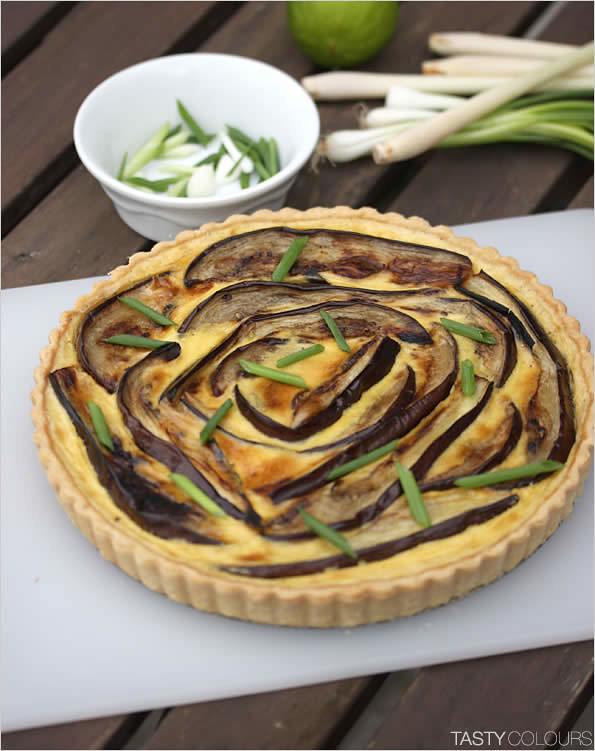


Makes approximately 1 round tart (26 cm diameter, 2 cm deep)

Ingredients:

Pâte sablée:
210 g all purpose flour + some extra
5 g salt
100 g cold butter
5 g homemade green curry paste (great recipes from She Simmers) or good quality green curry paste
30-70 ml cold water (as much the dough will take)

Tart filling:
3 medium or 2 large eggs
150 ml crème fraîche épaisse
300 ml coconut milk
20 ml light soya sauce
1 lime (zest and juice)
250g to 300 g chicken breast
1 large eggplant (around 250 g – 300 g)
Vegetable oil
1 handful fresh coriander / scallion or Thai basil, washed, dried and roughly chopped
Salt, pepper
1 stick lemon grass, chopped and smashed
1 tablespoon fish sauce (can be replaced with some more soya sauce, if you do not like it)
1 cm chopped ginger


1. Prepare the pâte sablée incorporating green curry paste, following the directions here. The best is for the tart dough to rest in the fridge overnight. On the next day finish and prebake the tart shell as explained in the recipe for the tomato tart linked above. Before placing it in the oven, add a bit of egg white over the inside bottom of the tart shell to prevent the liquid filling from soaking it at a later stage.

2. Cut the chicken breast into small cubes (around 1 – 1,5 cm) and marinate it overnight (or for at least one hour) in a bowl with some vegetable oil, a bit of fish sauce, chopped ginger and chopped, smashed pieces of lemon grass.

3. In a bowl, mix crème fraîche with coconut milk, eggs, soya sauce, lime zest (very finely chopped) and eventually a bit of salt and pepper. Put aside into the fridge overnight or for at least one hour.

4. On the next day preheat the oven to 180-200 degrees. Slice along the eggplant into thin (around 0,5 cm) slices (if necessary, spread salt over it before and put aside for around 30 minutes; however since most of eggplants do not have any bitter aftertaste nowadays, it might not be necessary). Oil the slices evenly, place them on a baking sheet lined with aluminum foil and grill until slightly gold on both sides, but not burn. Put aside.

5. Prebake the tart dough as described in my recipe for the tomato tart. In the meantime, remove the chicken from the bowl and discard pieces of ginger and lemon grass. Heat well a wok or a frying pan and sauté the chicken for a maximum of 2 minutes. Put aside.

6. Place the chicken pieces at the bottom of the tart, pour the coconut batter into it (but not too high, because you still need to add the eggplants). At the end, place the eggplants. They should not soak completely into the coconut milk, so they can grill even more during baking.

7. Bake the tart at the temperature of 180 degrees Celsius for around 20-30 minutes. It really depends on the quality of your oven. The batter has to be set and golden and the dough must be gold. Serve sprinkled with some fresh herbs - Thai scallions, coriander or Thai basil.

Sunday, July 15, 2012

Królewska uczta w eks-szalecie


Dear readers, today I am publishing the review about the first restaurant in Poland which gained a Michelin rising-star – Atelier Amaro in Warsaw. You will find the English version in a few days.

Parę dobrych tygodni upłynęło od mojej wizyty w Atelier Amaro w Warszawie, jedynej restauracji w Polsce, która do tej pory doczekała się wschodzącej gwiazdki Michelina. Swoją renomę w jakiś rok po otwarciu zawdzięcza ciężkiej, wieloletniej, mrówczej pracy Wojciecha Modesta Amaro z dala od mediów. Daleka jest mu też tak modna w dzisiejszym świecie celebrycka pseudorenoma budowana przy pomocy siły przekazu prywatnych stacji telewizyjnych.


Od momentu wizyty w Atelier przez te kilka tygodni robiłam różne rzeczy i załatwiałam dziwne sprawy. A to "przenosiłam" środki produkcji z jednego kraju do drugiego, a to rozmyślałam z mizernym skutkiem nad sensem istnienia, a to bezskutecznie waliłam głową w mur, a to rozważałam, co dalej z moim blogiem.

Tymczasem powróćmy do tematu. Amaro jest chyba dość powszechnie w branży uznawany za prawdziwego, a nie farbowanego reformatora kuchni polskiej, takiego, który naprawdę kuchnię polską chce wprowadzić w XXI wiek. Gdzieś wyczytałam, że uważa on, iż następną wielką kuchnią światową będzie właśnie kuchnia polska. Bardzo się z tego cieszę i mu kibicuję, ponieważ uważam podobnie, nawet jeżeli Francuzi nigdy nie polubią buraków, Anglicy kiszonej kapusty a Portugalczycy ogórków małosolnych.

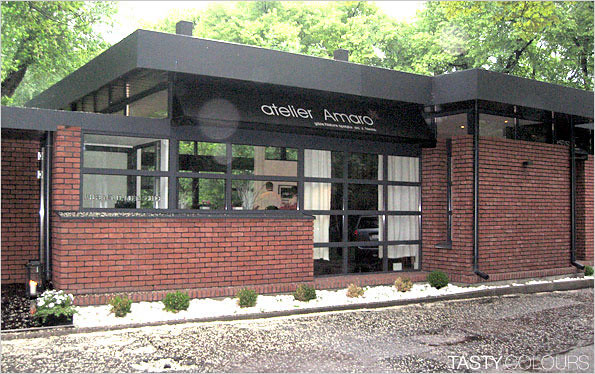
Jego Atelier mieści się na początku warszawskiej Agrykoli, po drodze z kawiarni Na Rozdrożu do Zamku Ujazdowskiego, w małym, parterowym budyneczku. Jak twierdzi mój tata, a ojciec przecież zawsze musi mieć rację, ten budyneczek to były miejski szalet.

Takie miejsce, czyli publiczny szalet zamieniony na restaurację, musi być i w przenośni, i dosłownie, miejscem wyjątkowym. Kto bowiem z nas jadł prawie gwiazdkową kolację w miejscu, gdzie król chodził piechotą? Jak się okazuje, Wojciech Amaro może tworzyć sztukę kulinarną właśnie w eks-szalecie. Nie potrzebuje lansować się na krakowskim Rynku albo naprzeciw Pałacu Prezydenckiego. Nie potrzebuje też u wejścia krzykliwych bannerów z własnym imieniem i nazwiskiem. Nie przechwala się w ogólnopolskich gazetach o jakości i ilości swoich kubków smakowych, które notabene - jako chyba jedyne w kraju - szkoliły się, czy też pracowały z zarówno z Ferranem Adrią albo Rene Redzepi. Wojciech Amaro może mieć restaurację - tak, powiedzmy to wprost - w starym, przerobionym szalecie, w parku, prawie że w chaszczach, ponieważ jego jedzenie obroni się samo i kto ma tam dotrzeć (rzecz jasna z odpowiednio zasobnym portfelem), ten dotrze. Nie zobaczycie go też w telewizji, bo jego to zwyczajnie nie interesuje. To jakość i klasa sama w sobie, która nie potrzebuje nachalnej reklamy, prawie że wyskakującej z lodówki, którą kupi przysłowiowy ciemny lud, dostający orgazmu na widok kłapania buzią bez ładu i składu, poniżania i obrażania innych ludzi.

W Atelier Amaro nie ma typowej karty z infantylnymi i kiczowatymi pseudo-barokowymi nazwami dań. Jest natomiast menu degustacyjne, z daniami określonymi jako "momenty". Według zapewnień Amaro, to menu zmienia się codziennie. Nie wiem, bo byłam tam tylko raz. Można nie lubić tego typu jedzenia. Można nie cenić tego sposobu prezentacji. Jednak trzeba przyznać, że prawie każdy taki moment to elegancki majstersztyk mający jakby trzy motywy przewodnie.

Z informacji, których osobiście udzielił mi Pan Wojciech oraz z różnych wywiadów dowiedziałam się, że przygotowania do otwarcia Atelier trwały dobrych kilkanaście miesięcy. Tyle czasu zajęło znalezienie odpowiednich produktów i dostawców.

Atelier jest restauracją niezbyt dużą. To zaledwie około 10 stołów/stolików, przy których usiądzie 40-50 osób. Wnętrze jest surowe, w kolorach neutralnych, ot taka niewymuszona elegancja nieco w stylu Scandinavian design. Nie żadne tam trendy wiejskie rokoko. Zamiast krzeseł wygodne fotele. W miejsce natłoku krzywo powieszonych kiepskich reprodukcji, nachalnych kratek, kwiatków i pasków oraz wypchanych bażantów, nierzucająca się w oczy, niepozorna prostota. Usiedliśmy z tatą przy stoliku koło okna, zza którego rozpościerał się widok na szumiącą, świeżą wiosenną zieleń Agrykoli. Czuliśmy się trochę jak w środku lasu.


Wybraliśmy menu degustacyjne "8 momentów" (8 mini dań). Do menu zamówiliśmy zgodnie z sugestią personelu wybór polskich niszowych wódek i nalewek, z których część jest wytwarzana specjalnie dla restauracji. Ten wybór okazał się nieco chybiony, nie ze względu na jakość, która jest przednia, lecz z uwagi na mój gust. Nalewki i wódeczki same w sobie były bardzo dobre, jednakże są to alkohole wysokoprocentowe. W zetknięciu z kreatywną, lekką kuchnią z akcentami molekularnymi, nie tworzyły perfekcyjnego duetu. Mieliśmy wrażenie, że niektóre z nich były zbyt słodkie. Nie mówiąc już o tym, że degustacja siedmiu czy ośmiu nalewek niekoniecznie dobrze robi żołądkowi. W kuchni Amaro jest bowiem mało węglowodanów i tłuszczu - czyli tego, w czym nalewki i wódki tradycyjnie lubią "pływać". Jestem więc zdania, i ojciec twierdzi tak samo, że restauracja do degustacyjnego, wykwintnego i tak delikatnego menu zdecydowanie powinna oferować selekcję win, nawet jeżeli łamie to zasadę, że wszystko co się tu podaje na stół jest polskie.


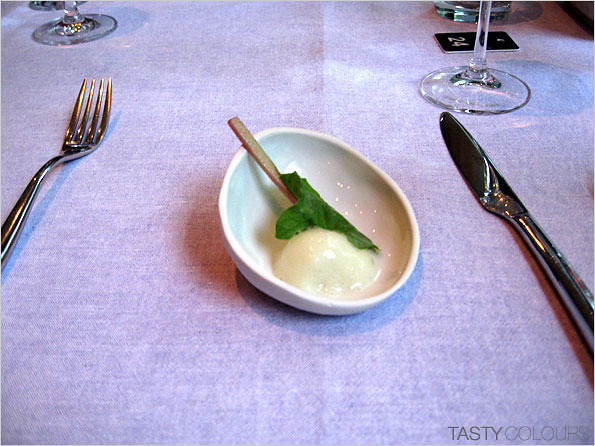
Najpierw zaserwowano nam trzy "czekadełka". Były to lody miętowe w kształcie lizaka w ciekłym azocie (niestety nie zdążyłam zrobić zdjęcia), lekka pianka - spuma z selera w tempurze z chrupiącą pałeczką z rabarbaru w cukrze, delikatne parfait z foie gras i kwiat akacji w tempurze - ciekawe doświadczenie, choć miałam niejasne wrażenie, że tempura była nieco przyciężkawa. Ale może przyciężkawe w tym dniu było moje podniebienie, kto to wie. 


Czekadełkom towarzyszyła nalewka z pędów sosny p. Karola Majewskiego z Łomianek, wybitnego producenta znakomitych nalewek. Nalewka ta, o mocnym posmaku sosny, była w naszym odczuciu nieco za słodka, co nieco przyćmiło cierpko gorzkawy aromat sosny, ale ja na nalewkach się nie znam, więc prawdopodobnie właśnie tak miało być. 
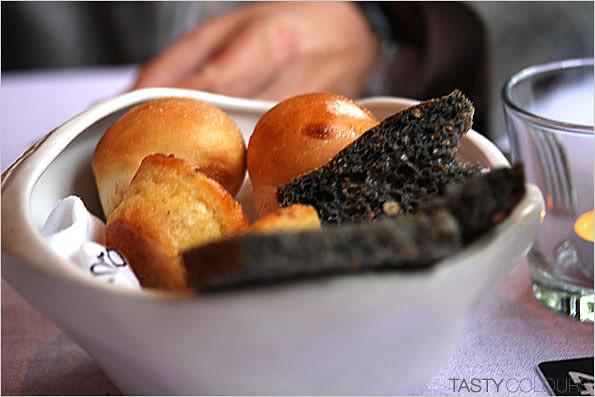
Przy czekadełkach podano również koszyczki z rewelacyjnym pieczywem, w tym osławionym już chlebem z palonym ekologicznym sianem. Ten chleb miał w sobie coś polskiego, aromat przypominający zapach palonych w polu traw.


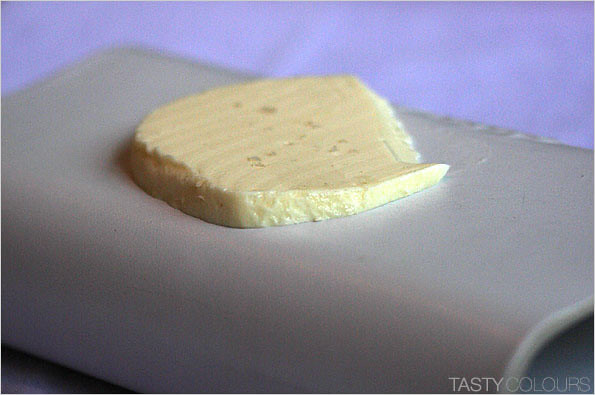
Niestety pieczywu nie dorównywało masło. Masło lubię i na maśle się znam, ponieważ moja kuchnia w dużej mierze na nim się opiera. Niestety to u Pana Wojciech smakiem i jakością nie odbiegało od smaku zwykłego masła ze sklepu za rogiem i chyba nawet takim było. Było to małe rozczarowanie, ale w obliczu wspaniałego chleba i bułeczek był to element mało istotny choć świeżo ubite wiejskie masło, oddające łzę wody przy naciśnięciu nożem, potrafi być naprawdę olśniewające w smaku.


Serwis w Amaro jest w pełni profesjonalny i wyszkolony. Szybki, uprzejmy, ale nie nachalny. Zarówno sommelier, jak i kelnerzy udzielali bardzo wyczerpujących informacji na temat poszczególnych nalewek i dań oraz technik ich przyrządzenia. Żadne pytanie nie zostało zignorowane. Niewątpliwym miłym akcentem była rozmowa z samym Wojciechem Modestem Amaro, który w pewnym momencie przysiadł się do naszego stolika i okazał się przesympatycznym, skromnym i przystępnym człowiekiem. A na dodatek bardzo przystojnym.


Pierwszy moment
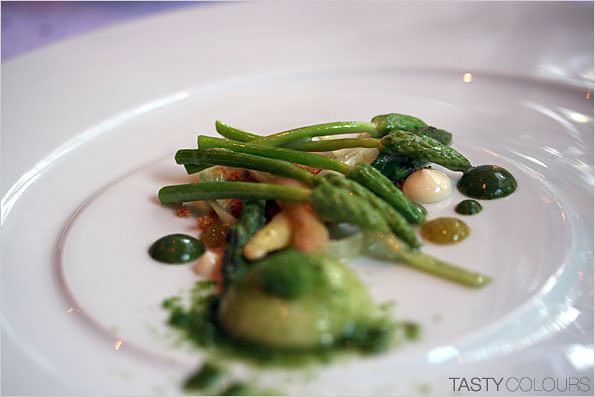
szparagi/sosna/bursztyn


Jako pierwsze danie degustacyjne dostaliśmy szparagową, świeżą, wiosenną przystawkę składającą się z chrupkich dzikich szparagów, żelu ze szparagów, pianki szparagowej, oraz granity szparagowo - sosnowej. Do tego mini-kleksy majonezu. Danie chrupiące w ustach i w swej prostocie świetnie skomponowane. Nigdy wcześniej nie jadłam dzikich szparagów i pewnie szybko ich nie spróbuję, chyba że Pan Wojciech mi podpowie, gdzie je zbierać. Nuta sosnowa również dobrze wyczuwalna, choć nie nachalna. Natomiast nuta "bursztynowa" (konkretnie chodziło o nasz polski ser bursztyn) niestety zupełnie dla mnie nieobecna. Danie obroniło się genialnym smakiem dzikich szparagów.


Drugi moment
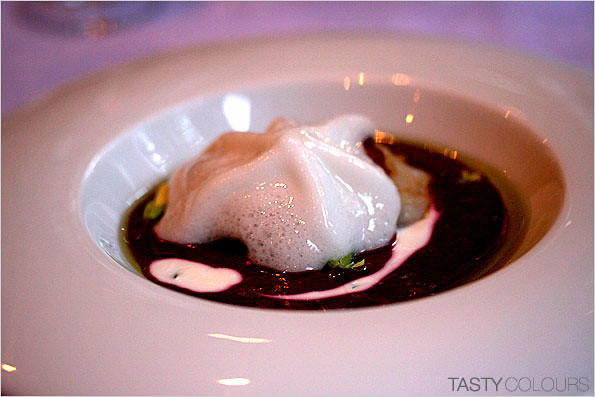
botwinka / werbena / św. Jakub


Przed podaniem kolejnego dania z menu zaserwowano nam wykwintną, ziemistą i mocną wódkę Vestal Kaszebe z roku 2009. Z tego co pamiętam, wódkę tę wyprodukował Polmos Siedlce z ziemniaków pochodzących z Kaszub. Wódka Vestal Kaszebe uznawana jest za jedną z najlepszych wódek według klasyfikacji dla wódek będącej odpowiednikiem Parkera dla win i dostała maksymalną ocenę na alkohole twarde. Niestety nie wiem, gdzie i kiedy, ale się dowiem. Jest to limitowana seria (zgodnie z informacjami znalezionymi z sieci, wyprodukowano niecałe 5 tysięcy jej butelek).


Momentem przewodnim drugiego momentu uczty w "szalecie" była botwinka, werbena oraz małże św. Jakuba. Zaserwowane danie było rodzajem zupy o konsystencji gęstego kremu z botwinki z werbeną oraz perfekcyjnie przyrządzonym przegrzebkiem. Całość przystrojono lekką pianką chrzanowo - jogurtową oraz kwiatuszkami kwitnącej rukoli. Kwiatki rukolowe to była kwintesencja pieprznego smaku tego zielska. Przewodnie motywy dania wskazywałyby na to, że będzie wytrawne, tymczasem najbardziej wyczuwalny był smak truskawki, która jak się okazało, również była składnikiem tej kompozycji. Jedyne, do czego mogę się przyczepić, to okoliczność, że smak truskawki zdominował botwinkę do tego stopnia, że z tej ostatniej pozostał kolor. Wybaczam, ponieważ całość była pyszna.


Trzeci moment
grasica / topinambur / borowik


Przed zaserwowaniem trzeciego dania, z jednym z moich najbardziej ulubionych składników to znaczy grasicą cielęcą, podano nam nalewkę o nazwie "cztery pory roku". W jej skład wchodziły: alkohol, cytryna oraz - jak zapewnił nas sommelier - jedyne w Polsce 3,8 procentowe mleko. Słyszeliście o takim mleku ? Ja nie.

Grasicę cielęcą w krakowskich sklepach jest niezmiernie trudno dostać, zatem prawie zawsze, gdy mam możliwość jej spróbowania w restauracji, nie waham się i zamawiam. Grasicę w Amaro podano z zapomnianym, ale powracającym powoli do łask warzywem o nazwie topinambur. Topinambura podano w różnych odsłonach: delikatnego puree, panna cotty oraz malutkiego sufleciku. Topinamburowi i grasicy towarzyszył "tatar" z borowików o lekko kwaskowatym posmaku. Był on ułożony na dość modnej ostatnio jadalnej ziemi. Tutaj, w Atelier, była to "ziemia" z grzybów. Niestety w miniskulnej ilości, tak więc była prawie niewyczuwalna. Za to grasica była wspaniała i delikatna, a całe danie odznaczało się świetnym balansem smaków. Nic dodać, nic ująć. To po prostu moje klimaty.
Po tym daniu zręczny sommelier nalał nam po kieliszeczku nalewki z pigwowca (dzikiej pigwy) - nalewki zrobionej specjalnie na zamówienie restauracji.


Czwarty moment
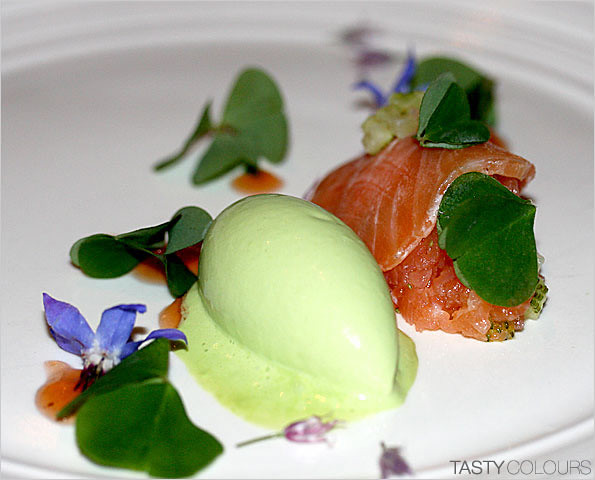
troć / szczypiorek / rabarbar


Czwarty moment był, pamiętam, zimny. Podano tatara z troci z zielonymi truskawkami i kawałkami ryby. O ile tatar sam w sobie był smaczny, a szczawik zajęczy zaskakujący w smaku, o tyle zielone, czyli niedojrzałe truskawki, to nie moje rejony. Całość tego zimnego w sensie energetycznym dania uzupełniały wytrawne lody szczypiorkowe, kwiaty ogórecznika oraz szczypiorku.
Zajadając tę przystawkę i popijając nalewkę przyznaję, że czułam się coraz bardziej na gazie. Dobrze, że był chleb z popiołem i woda mineralna do popicia i że zdążyłam doprowadzić się do pionu.
Nie pamiętam, abym w tym daniu wyczuła nutę rabarbarową; moje notatki wskazują, że nie, a tata twierdzi, że też nie pamięta.


Piąty moment
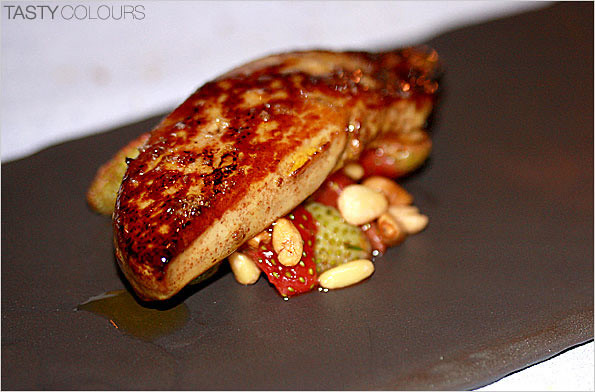
foie gras / truskawka / jałowiec


 To niehumanitarne w pewnym sensie danie to znowu moje rejony. Lubię od czasu do czasu zjeść sobie dobre foie gras. Podobno gdzieś w Pirenejach jakiś Hiszpan tuczy gęsi na wolnym wybiegu metodą naturalną, to znaczy gęsi żrą to, co same znajdą – konkretnie jakieś żołędzie. Nie pamiętam już kto, w każdym razie jakiś gwiazdkowy francuski szef zjechał to hiszpańskie foie gras. Twierdził, że była to profanacja tego francuskiego i że niewiele ma wspólnego z oryginałem. Wybrzydzał przy tym ów szef jak Gordon Ramsay  nie powiem w jakim programie. Mniejsza z tym. No więc lubię foie gras. A gdy je już jem, to lubię przełamać sobie przełamać jakąś słodką konfiturą, czy to z cebuli, fig, żurawiny, a nawet naszej polskiej brusznicy. Foie gras w Atelier było usmażone perfekcyjnie. Było pyszne. Pokryto je glazurą z syropu świerkowego. Ciekawy smak, choć miałam wrażenie, że glazura ta została rozsmarowana nieco nierównomiernie. Niektóre kęsy foie gras zdominował smak syropu, a w innych nie było go czuć w ogóle. Foie gras podano  – jak to określił kelner – z chutneyem z truskawek. Nie był to jednak chutney, a po prostu pokrojone zielone i czerwone truskawki w towarzystwie aromatu świerku i orzeszków pinii.  Tutaj muszę się nieco przyczepić. Na kolacji byłam pod koniec maja, a więc przed początkiem sezonu truskawkowego. I niestety te czerwone truskawki w Atelier nie miały smaku naszej poczciwej polskiej truskawki z grządki. A truskawka dojrzała poza sezonem jest niedobra i już.


Na osłodę zaserwowano wódkę różaną golden rose.


Szósty moment
dorada / smardz / dymka


Zaserwowano jednokrotnie destylowaną wódkę z pszenicy z aromatem wanilii - destylarnia Chopina. Gdy odbijało mi się wanilią, kelner przyniósł filet z dorady, w towarzystwie smardza w aptekarskiej ilości i galaretką ze szparaga. Podano to z liściem lipy, kawiorem (kuleczkami) z oliwy, bobem, groszkiem zielonym, czereśnią (choć nie było sezonu na czereśnie), a także pianą z zielonego jabłka i groszku oraz sosem z fenkułu i pędami zielonego groszku. Uff. Wszystko to było pyszne, szkoda tylko, że smardza i galaretkę ze szparaga dostałam tylko ja, a mój tata to już nie :) Ewidentna pomyłka kuchni. Kelner, po grzecznym zwróceniu mu na to uwagi, przeprosił mówiąc, że przy tak skomplikowanym gotowaniu to się czasem może zdarzyć, ale wymiany mini-dania na pełne składników już nie zaproponował. Ojciec, doświadczony smardzolog, pozostał niepocieszony. Na szczęście ryba, choć puściła nieco soku na talerzu, miała perfekcyjnie usmażoną skórkę i była pyszna.

Przy tym daniu zaserwowano również dwie wódki z ziemniaków: pierwsza to jednokrotnie destylowana wódka z młodych ziemniaków zbieranych w czerwcu 2010 roku (Polmos Siedlce) o zaskakującym słodkawym, jakby lekkim posmaku owoców liczi, a zaraz po tym dla kontrastu kontrastu wódkę ze starego ziemniaka (2010) o piwnicznym zapachu, jaki można poczuć wchodząc do zatęchłej piwnicy.

Siódmy moment
sarna / borówka / modrzew


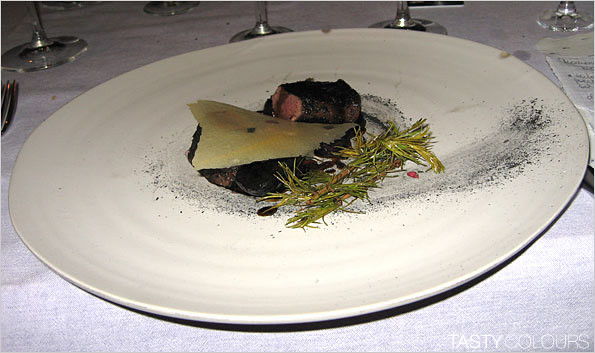
Ostatni, wytrawny moment tego wieczoru to sarna przyrządzona metodą sous vide (niestety zapomniałam zapytać ile czasu trwało jej przyrządzenie tą metodą), podana z "kawą" z żołędzia. Do tego dania na wszelki wypadek zamówiliśmy po kieliszku hiszpańskiego wina, żeby żołądek odpoczął. Towarzyszył temu cienki jak pergamin chips ziemniaczany o celulozowej jakby strukturze. Mięso podano z owocami leśnymi, m.in. borówką (brusznicą), poziomką, jeżyną oraz szalotką aromatyzowanymi modrzewiem. Sarnina była miękka, a równocześnie różowa w środku. Niestety towarzysząca jej jeżyna była mrożona - nic dziwnego, skoro podana poza sezonem. Całość dopełniał jadalny popiół z ekologicznego siana i fioletowa dzika marchewka. Moją sarnę podano na ubitym talerzu. Nie przeszkadzało mi to specjalnie, ale oceniający w przyszłym roku wizytator przewodnika Michelin na pewno skrzętnie zanotowałby sobie taką wpadkę.
Przed deserem zaserwowano wspaniały likier czekoladowy - kombinację Wedla na bazie wódki żytniej Chopin.


Ósmy moment
truskawki / jagoda / malina


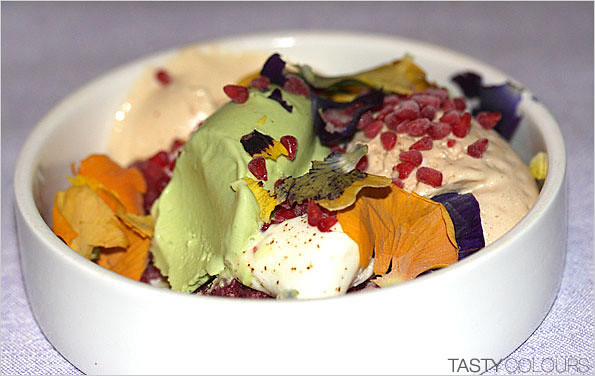
Choć w tytule momentu napisano "truskawki / jagoda / malina", to motywem przewodnim były tutaj trzy rodzaje lodów: sosnowe, migdałowe oraz jałowcowe, o mocno wytrawnym smaku. Podano je w towarzystwie jogurtu, confit truskawkowego, biszkoptu z musem z jakichś kwiatów (nie zdążyłam zanotować, jakich), malinami mrożonymi ciekłym azotem oraz płatkami jadalnych kwiatów. To był bardzo wytrawny i niesłodki deser - kto lubi słodkości na bazie masła, czekolady, jajek i śmietany, ten prawdopodobnie będzie niepocieszony, ale może ta prowokacja ma wieńczyć dzieło ? Ja z deserów najbardziej cenię grzybki marynowane, więc lody o wytrawnych aromatach smakowały mi.

Cóż mogę napisać na koniec. Wszystkie podane nam dania były przyrządzone perfekcyjnie pod względem technicznym oraz zaprezentowane w stylizacji typowej dla tego rodzaju kuchni. Wszystkie były w kulinarnym sensie wyjątkowe i harmonijne. Jednak czuję się odrobinę zdezorientowana. Do Atelier jechałam z jednej strony z nastawieniem, że będzie to kulinarna zabawa, ale z drugiej, że będzie to nowe odkrywanie Polski i tajemnic jej smaków. Tymczasem kuchnia prezentowana w Atelier jest w istocie kuchnią kosmopolityczną, w bardzo luźnym stopniu nawiązującą do kuchni polskiej. Pan Amaro sięga po pewne składniki i aromaty, smaki popularne podobno dwieście, czy trzysta lat temu, a równocześnie omija wielkim łukiem ostatnie siedemdziesiąt lat. Spróbujemy polskiego lasu (sosna, świerk, modrzew, jałowiec). Spróbujemy niegdyś popularnego topinambura. Ale foie gras, dorada, przegrzebek ? Trochę brakowało mi "łącznika" pomiędzy przeszłością, a teraźniejszością....Chciałabym tam kiedyś wrócić i spróbować ultranowoczesnych wariacji na temat klasycznej kuchni polskiej, bo to moim zdaniem jest trudniejsze niż robienie spumy z chrzanu czy lodów szczypiorkowych. Podsumowując było perfekcyjnie i pysznie, ale oczekiwana magia gdzieś uleciała. Wrażenia taty były bardzo podobne.

Pora zaplanować wyprawę do Nomy w Kopenhadze. Najpierw trzeba jednak zarobić jakieś pieniądze.

Wyprawa do Atelier Amaro kosztowała tatę 1200 złotych (ok. 280 złotych za ośmiodaniowe menu degustacyjne od jednej osoby, czyli 560 za dwie, a reszta to wybór nalewek, po kieliszku wina na głowę oraz woda mineralna).
Wybaczcie mi jakość zdjęć - większość z nich jest nienajlepsza, ale było już ciemnawo, a ja nie chciałam błyskać fleszem i przeszkadzać innym gościom. 

Wednesday, May 9, 2012

Bonjour Le Printemps!


We are right after a long weekend which lasted, for some of us, for nine days. The weather was great, the heat was extreme – over 30 degrees – hard to imagine that it had been snowing a month ago. Polish asparagus appeared on local food markets. Sellers of fresh herbs came back from their winter holidays so I can enjoy those from Poland and not from Israel. Spanish strawberries are cheaper and cheaper. Polish strawberries appeared this week but they are outrageously expensive. The conclusion is: Spring is here!
Springs means of course more vegetables and salads. Today’s salad is simple, but great if you have fresh and good ingredients. It is the quintessence of the asparagus season. In Poland, asparagus are more particularly planted in the west of the country – Wielkopolska – close to Germany. More than the half of the Polish production is exported to our German bothers. That is why more than 90 per cent of the Polish asparagus production focuses on white asparagus (Germans prefer white ones). And which ones do you prefer? The green ones or the white ones?
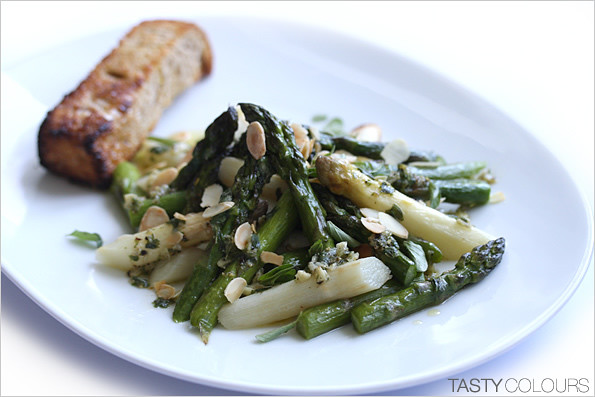
The first time I had this salad it was a year ago at my father’s, at the end of the asparagus season. He served them in a nicer way than me today, and if you want to impress your guests you should present them like my Dad does. Just place the pieces of asparagus on a round plate in such a way they create a rosette shape. The salad is really extraordinary in taste; it has a lot of minced garlic and a lot of fresh oregano leaves as well. All this bathing in quite a big amount of olive oil – but do not worry, asparagus are very low in calories, and if you do not add any fat you will be hungry after 10 minutes! You can serve them warm or cold and they taste even better with a slice of grilled or toasted crispy bread. I did not have any pine nuts like in the original recipe but I replaced them with grilled almond flakes, which go well, too. I will use pine nuts next time, although they became as expensive as gold. The second alteration to the recipe that I did today was to bake the asparagus in the oven.  Since I discovered the difference between cooked and grilled (or baked) asparagus I never came back to the method of cooking them in water. Grilling, baking or even sautéing helps to concentrate the taste of this extraordinary vegetable. Boiling them will weaken their taste a bit, and will further fade the vivid color of the green ones. In order not to dry the asparagus out in the oven, rub them with quite a lot of olive oil (including their tips). The only ingredient you cannot omit is fresh oregano. This is what makes this salad different and so tasty.

White and Green Asparagus Salad with fresh Oregano Dressing

Serves 4 as a starter or 2 as a regular lunch meal


Ingredients
1 bunch white asparagus (around 500 g)
1 bunch green asparagus (around 500 g)
4 big garlic cloves, peeled and finely chopped
1 handful fresh oregano leaves
Few tablespoons good quality olive oil (around 50 ml)
Salt
Quite a lot of freshly milled black pepper (around 1 flat tea spoon)
1 tablespoon white wine vinegar
1 handful sliced almonds or pine nuts


1. Wash asparagus and oregano. Dry them.
2. In a hot frying pan grill sliced almond or pine nuts for 1 to 2 minutes. Be careful not to burn them. Put them aside to cool down completely.
3. Prepare the asparagus: break them or cut off the wooden, dry parts of them and discard them. Peel white asparagus with a peeler and if necessary, peel delicately the thicker part of green asparagus stems (sometimes those thick green asparagus have a quite hard stem which does not cook very well). Try to choose white asparagus of the same thickness as the green ones, otherwise the cooking time will vary the two.
4. Preheat the oven to 200°C. Place asparagus in a baking dish, pour some olive oil in the dish and rub them with it (do not forget to rub the tips as well, so they do not dry out). Put into the oven and bake until soft or al dente (I prefer this last option). Occasionally check them and mix them so they grill / bake evenly.
5. Prepare your dressing: in a mortar or in a bowl, mix olive oil with half of oregano leaves and mash it slightly. This will help to extract the flavor of the herb. Add garlic, white vinegar, salt, and quite a lot of freshly milled black pepper. Taste if it is spicy and sour enough. In the meantime, grill or toast you favorite bread.
6. Remove the asparagus from the oven. Cut them into shorter pieces and place those on a plate (if you have more time than me today, you can create the rosette as indicated above in this post). Pour your dressing over; add sliced almond or pine nuts and the remaining leaves of oregano. Eat and enjoy.


Bon appétit!

Friday, March 23, 2012

Cabbage rolls (Gołąbki)


My engagement into professional life did not allow for posting for a long while. I know, I know I should have warned you! I am extremely sorry for that. I am timidly coming back to you with another Polish classical dish – cabbage rolls named “gołąbki”.

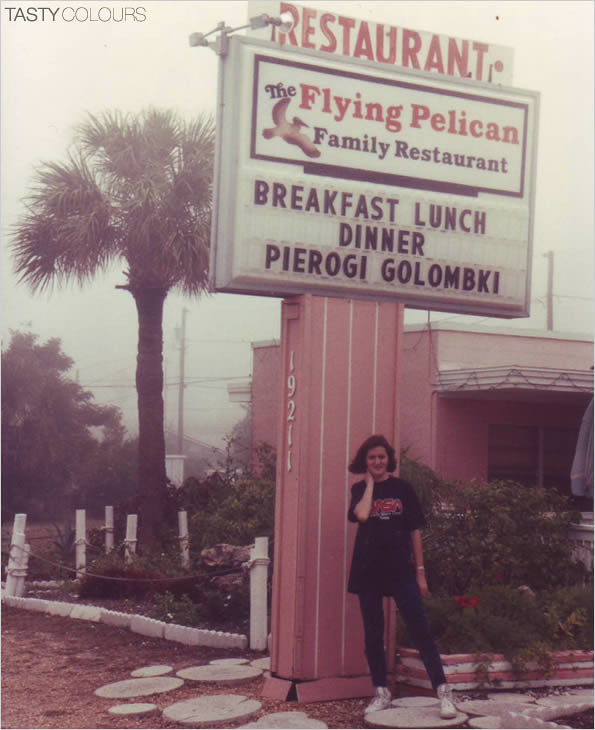
The picture that you can see below was shot by my father in December 1989, in Florida. The young girl that you can see on that picture, well that’s me, when I was 15. I could not resist publishing it tonight. It was my first trip not only to the U.S., but to the Western World – straight from a grey (but allegedly the funniest) communist country.  I can remember – and if I am wrong I am sure that my father will correct me after reading this post – that when we were on the highway in Florida, we suddenly stopped over because we had noticed a small restaurant building with a Polish signage (which was rather not so common at that time in Florida and probably still is not nowadays), close to a city called St. Petersburg (but not in Russia). We stopped there because we noticed the names of the most common Polish dishes – “pierogi” (dumplings), and “golombki” (cabbage rolls). Unfortunately, the restaurant was closed.

The literal translation of the dish means “little pigeons”. But it has nothing to do with those birds which I hate by the way (because they shit all over and they wake me up at 5 o’clock in the morning). Those cylindrical cabbage rolls are usually stuffed with meat, rice, kasha oraz mushrooms etc. Then they are baked in the oven or slowly cooked in a heavy pot (depending on family traditions). The origins of the name “gołąbki” are not quite clear. I only found out that in Slavic languages and culture, names of animals and birds had been frequently used to name breads and meals, in particular ritual ones. The name “gołąbki” was probably taken from the Ukrainian language.

From the technical point of view, the rolls are more time consuming than difficult to prepare. Probably that is why they were not cooked on a regular basis in my home. Although my mother claims that she used to prepare “gołąbki” regularly, I swear that I cannot recall of that.
It is actually surprising that such a time consuming preparation (the same applies to “pierogi”) were and still are a popular dish in all canteens, cheap bars and family restaurants. There, the most common version goes with pork, rice and tomato sauce. The version that I can remember from my school canteen was awful; the cabbage leaves in which the stuffing was rolled were always too hard. On the contrary, the rice and meat stuffing was overcooked. The tomato sauce was made from concentrate and it was very thick due to the great amount of thickeners like flour, for example, that was used.

I changed my mind towards “gołąbki” thanks to a friend of my mum’s, as it was one of her flag dishes. Hers were different. She never used white cabbage leaves. Instead, she preferred the more delicate savoy cabbage. She was stuffing them with rice and soaked, dried forest mushrooms (as most people in Poland do not eat meat for Christmas Eve dinner). But even though, a good few years had to pass before I made my first cabbage rolls. I was always scared to blanch the cabbage leaves in boiling water – it looked like a horrible job to me.

Of course, one can use regular white cabbage leaves to make “gołąbki”. I think however that savoy cabbage is better – it has thinner leaves and tastes better once cooked. You can also experiment with red cabbage leaves. In the recipe presented in this post I used pork meat (or you can use your favorite). Rustic and old fashioned versions include mashed potatoes and onions (as “ruskie pierogi”), as well as forest mushrooms.

Some people (like me) bake those rolls in the oven; some simmer them slowly in a “cocotte”. Irrespective of the method you use, you will need some liquid (vegetable, meat or mushroom broth or for example, my latest discovery – “żurek” – this I learnt recently from my father who himself learnt it from his mother). You also need a large, deep pan with a thick bottom.

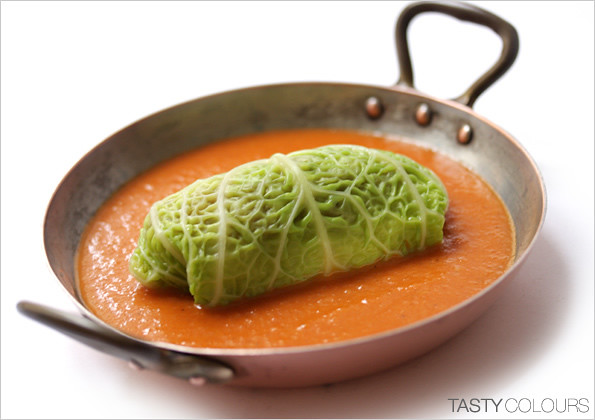
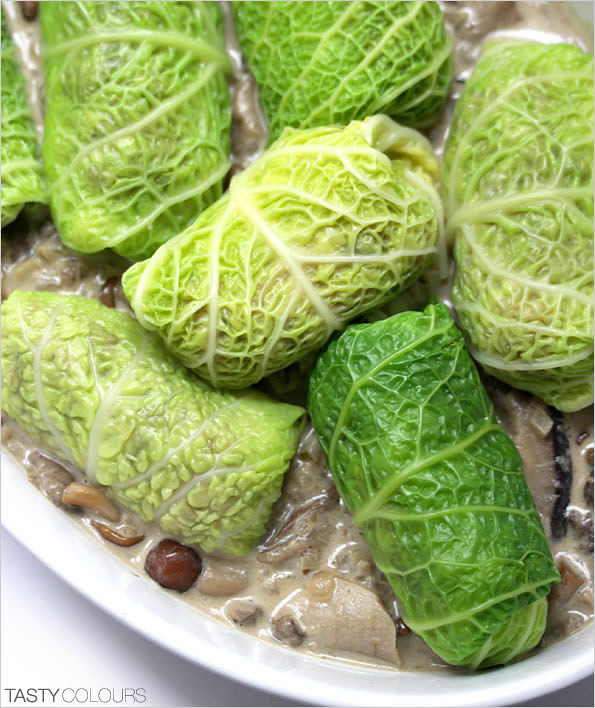
Usually the rolls are stuffed with rice. But traditional recipes call for authentic Polish grains – for example barley, or buckwheat. You may serve your gołąbki sauté, just like this, cooked in their own juices. However, I believe that in Poland the most popular way to serve them is with tomato or mushroom sauce.

In the past a rustic version of this common food was also made from the leaves of pickled cabbage (the cabbage was pickled in whole). Nowadays, you will not find this version in Poland (but I’ve heard that one can find it in stores selling Russian food in New York).

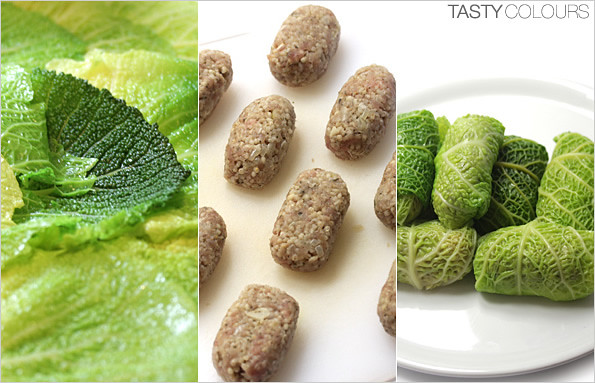
Note that I could not resist photographing them before baking them, when the green colour of the leaves looks so nice and inevitably fades away after baking.


Serves 4 (8-14) cabbage rolls depending on the size of cabbage leaves


Ingredients:

For the rolls:
1 savoy cabbage (around 1.3 kg)
350 g ground pork (you can use your preferred meat; for a vegetarian version use around 500 g of mushrooms – you must sauté them beforehand)
100 g kasha (for example buckwheat or barley)
1 teaspoon marjoram, preferably fresh
800 ml to 1l broth (meat, mushroom or vegetable)
1 big yellow onion, peeled, washed and finely chopped
2 garlic cloves, peeled and finely chopped
2 tablespoons butter
3-4 tablespoons goose grease (or vegetable oil)
Salt
Pepper

For the  tomato – vegetable sauce:
600 g ripe tomatoes, blanched, peeled and seeded; cut into quarters (optionally, use canned tomatoes)
2 garlic cloves, peeled and finely chopped
1 onion, peeled, washed and finely chopped
1 medium carrot, peeled, washed and very finely chopped
¼ small celery root (around 100 g); peeled and washed, very finely chopped
100 ml dry white wine
200 to 250 ml broth (use the one prepared for the rolls above)
1 tablespoon chopped parsley
½ teaspoon sweet powdered paprika
3 tablespoons olive oil
Salt
Pepper
Sugar

For the mushroom sauce:
450 g forest mushrooms (ceps, boletus, chanterelles) – fresh or frozen
1 large yellow onion, peeled and finely chopped
Around 150 ml meat or vegetable broth
100 ml sour cream
Salt
Pepper

For “sauté style” in żurek (then you do not use the meat or vegetable broth as indicated above)
500 ml żurek (recipe HERE)
4 to 5 g dried forest mushrooms


Kasha preparation:
1. Place kasha into strainer and rinse under running water. In a hot saucepan with a thick bottom, melt goose grease (or vegetable oil).
2. Add grains and fry, mixing constantly, around 3 to 4 minutes (until grains become a bit transparent).
3. Add the same volume of liquid (broth) and cook under cover, over a low flame, until the stock is completely absorbed. I prefer when kasha is half cooked.  Then it will not be totally overcooked after baking your gołąbki in the oven.
Put aside.

Preparation of cabbage rolls:


1. Take a big pot (I use a 10 liter pot) and boil around 6 to 7 l of water with some salt. Keep it simmering. 
2. Remove external leaves of the cabbage. Throw away those which are rotten. Put aside those which are just too thick and too hard – you will need them later on.
3. Using a sharp knife, delicately start to core the cabbage. The goal is to separate the leaves one by one without damaging them. You will find detailed instructions on how to core the cabbage on http://www.ehow.com/how_2087524_core-cabbage.html. Choose the largest and nicest ones (you will need about 14 of them) to make the rolls. Put aside the smallest ones – you will need them later on.
4. Place cabbage leaves in batches of around 3 or 4 into boiling water and blanch them a couple of minutes. They have to soften a bit but should still retain their vivid green color. Do not put them at once because you can break the leaves. Place the blanched leaves on a round, flat plate, let them cool down because now you have to remove delicately the central “nerve” from each of the leaves, so they can roll nicely and evenly. 
5. Take a frying pan. Heat it well and melt the goose grease (or oil). Add onion, fry over medium flame mixing constantly for around 10 minutes until it is cooked (onion needs time to cook). Add garlic and sauté for another couple of minutes.
6. Take a large bowl. Mix pre-cooked kasha, meat, fried onions with garlic, marjoram, salt, pepper and make it homogenous.
7. Divide the stuffing into equal parts and form them into cylinders. I am not “gołąbki” master, I usually count the number of leaves, check the size of them and I divide the stuffing according to the size of the leaves. Place each cylinder in the center of a cabbage leave (usually around 60 g of stuffing).  Fold the bottom edge of the leaf up and away from you. Fold in the sides and roll as for spring rolls.
8. In the meantime, heat the oven to around 180 degrees Celsius. Roughly chop the remaining cabbage leaves (those which you put aside earlier on) and place them in the bottom of the pan (they will prevent the rolls from burning). Then place the cabbage rolls in layers, quite tightly (they will shrink during baking). Now pour some broth, add a few strips of butter and place the rest of the cabbage leaves on top. Bake in the oven for at least 2 hours. If the liquid evaporated, add some more.

Serve with either: baking juices, tomato sauce or mushroom sauce.

This is a type of food which tastes even better on the next day.


Tomato - vegetable sauce


1. Pour olive oil into a hot frying pan. Wait until hot, add onion and fry over a small flame for around 10 minutes, mixing often and being careful not to burn it. Add garlic and fry for a couple of minutes, mixing.
2. Then add carrot, celery root and simmer for 10 minutes. If necessary, pour a bit of vegetable stock. Add tomatoes and cook for another 30 minutes over a low flame, mixing from time to time. If necessary, add some vegetable stock so the sauce is not too thick.
3. After 15 minutes, add white wine and reduce the sauce. Add salt, pepper, paprika and if necessary, a bit of sugar and cook for another 5 minutes. Blend the sauce (although this is not an obligation).

Mushroom sauce:


1. Clean mushrooms from forest leftovers. Slice them into equal parts (if necessary).
2. Heat well the frying pan, add olive oil, onion and fry over medium heat, mixing constantly.
3. Once the onion is nicely cooked, add mushrooms. Fry them for a few minutes over maximum heat until the juice is evaporated. Then add some broth (vegetable, meat or whatever you have) and cook for another 10 minutes, until the juice is reduced and thick.
4. Add cream, season with salt and pepper according to your taste. Sprinkle with fresh parsley (optional) before serving.

“Sauté style” in żurek

1. In a small saucepan, bring to a boil around 200 ml of water and add dried mushrooms. Cook them for around 30 minutes (eventually, you can soak them in water overnight and eventually boil them the next day for around 10 minutes).
2. Add mushrooms with the mushroom broth into “żurek” base (you will find the recipe HERE). Pour around ¾ of this liquid into the pan with rolls and then put them into the oven. In this version, you do not use vegetable or meat broth as in the basic recipe.. Check occasionally, if the whole juice evaporated, add a bit more.
Related Posts Plugin for WordPress, Blogger...