Showing posts with label Salads. Show all posts

Tuesday, October 22, 2013

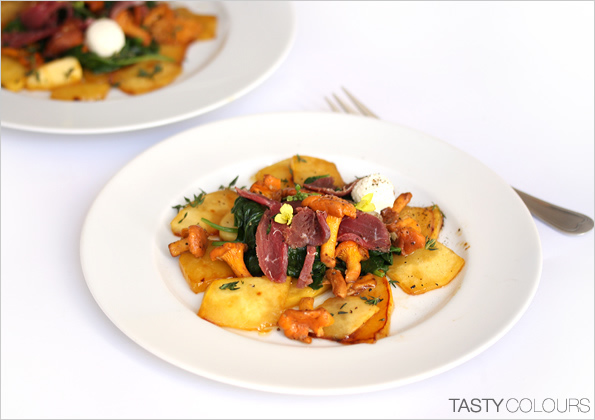
Goose Season. Warm Salad with Smoked Goose Breast, Chanterelles and Pumpkin.

Summer in Poland is gone. We are close to November which means that the peak of the goose season approaches. As you might remember it, last year I wrote a bit about the excellent Polish oat goose. I also mentioned the action promoting the Polish oat goose – "Gęsina na św. Marcina" – (goose tastes best on St. Martin’s fest”). This year, the event will last for more than two weeks: from 8th November to 1st December 2013. Selected restaurants, including top ones, have goose specialties on their menu. If you are in Poland at that time, I strongly recommend to visit one of the restaurants listed HERE.


Goose meat is also promoted by the authorities of the Kujawsko-Pomorskie Region. The region and a local touristic organization have created the "Goose Culinary Route" (Gęsinowy Szlak Kulinarny) which is financed, inter alia, by the Polish Ministry of Sports and Tourism. The region specializes in goose breading, and goose meat produced in this area is of a very good quality. You may then taste the classic baked goose, but also the famous "półgęsek" (an ancient specialty made from boneless goose breast with the skin on, cured and slowly smoked) or "okrasa" (a kind of spread which you can use as a topping for tartines). The official opening of the Goose Culinary Route is planned for the 7th of November 2013:

Below is a list of restaurants which are recommended by a special committee and, as a result, are listed on this culinary route:
  1. Restaurant "Weranda", Hotel Bohema, Bydgoszcz
  2. Restaurant "1921", Hotel Pod Orłem, Bydgoszcz
  3. Restaurant "Za piecem", Bydgoszcz
  4. "Regionalna Warzelnia Piwa", Bydgoszcz
  5. Hotelu Filmar Restaurant, Toruń
  6. Hotel 1231 Restaurant, Toruń
  7. Hotel Heban Restaurant, Toruń
  8. Jan Olbracht Browar Staromiejski, Toruń
  9. Sfera by Sebastian Krauzowicz Restaurant, Hotelu Copernicus, Toruń
  10. Ostromecka Restaurant, Ostromecko
  11. Gęsia Dolina Restaurant, Ślesin
  12. Karczma Rzym, Pawłówek
  13. Karczma Borowiacka, Bysław
  14. Vistula Hotel Restaurant, Świecie
  15. Karczma Chełmińska, Chełmno
  16. Hotel Młyn&SPA Restaurant, Włocławek
  17. Pałac Bursztynowy Restaurant, Włocławek

I still have one "półgęsek" in my fridge which I bought in Gruczno as it is practically impossible to buy it in any shop in Kraków (the distribution of local products in Poland is really bad and this is due to various reasons). Some restaurants here serve it occasionally. If I had my own house with a garden and a smokehouse, I would make this "półgęsek" on my own – the recipe itself is not complicated. I also brought from Gruczno an excellent buckwheat honey made by Mr. Wnuk from Lniano. His buckwheat honey won the first place at the Festival (it was also served during our Parisian event by chef Baron. It goes very well with sautéed pumpkin.

Warm Salad with Smoked Goose Breast, Chanterelles, Pumpkin and Spinach
(sałata na ciepło z półgęskiem, kurkami, dynią i szpinakiem)


Ingredients (serves 2-3)
200 g chanterelles
100 g smoked goose breast (półgęsek), thinly sliced (may be replaced with magret de canard)
1 small bunch fresh spinach leaves
200 g pumpkin, cut into thin slices
Buckwheat honey of good quality
1 table spoon, lemon juice
50 g fresh goat cheese
1 garlic clove, thinly chopped
Butter
Olive oil or cold pressed colza oil
Arugula flowers (optional)
Fresh thyme
Salt
Pepper

Prepare the mushrooms: Using a brush, delicately clean mushrooms from leftovers of the forest. Scratch the stems to remove soil. Rinse the mushrooms delicately under cold water. In a saucepan, slowly melt butter over minimum heat (do not stir). Remove from heat and skim the foam off the surface. Spoon the butter into a bowl. Discard the milky sediment. In a hot large frying pan, heat butter, add mushrooms (they should not be crowded, so they can grill evenly) and fry them on each side for a couple of minutes, until nicely grilled (depending on the thickness) and until they release their juices and absorb them back in (when frying over high heat, they should not release a lot of juice). Add garlic, fry for about one more minute. Salt and pepper.
Prepare the spinach: clean and wash your spinach, spin it. In a hot large frying pan, heat butter with a bit of olive oil, add spinach and fry it until soft. Salt at the end. At the same time, in another frying pan, melt some butter, add pumpkin slices, fry for a couple of minutes, then add honey with lemon. Reduce the heat and let the pumpkin simmer until nicely grilled and caramelized.

Prepare your salad: roll tiny cheese balls from your goat cheese. Heat the mushrooms. Put the caramelized pumpkin onto your plates. Put the spinach, chanterelles, cheese balls and the goose meat on top. Top generously with fresh thyme leaves, salt and pepper, as well as some olive oil or colza oil if you want.

Bon appétit !

Wednesday, December 26, 2012

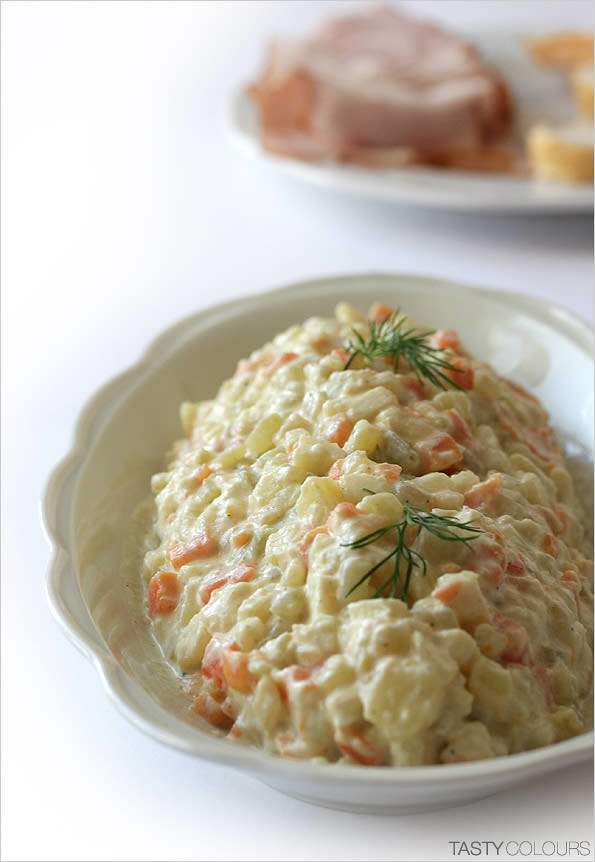
A Christmas Must Have: Root Vegetable Salad


This vegetable salad is a traditional Polish accompaniment. I suppose that it is made in nearly every Polish home at least twice per year. Also in my family, everybody cooks and chops root vegetables before Christmas Eve and Easter. My grandma Pola, who now is 86 years old, and always was an excellent cook, used to serve it for other occasions like, for example, her name day (“imieniny”), which, in Poland, used to be more popular than birthdays. When I was 3 years old, my parents took me to my grandma's to celebrate her name day. I wanted to help her and I offered to carry a large glass bowl containing the salad from the kitchen to the dining room. Unfortunately, the floor was polished and slippery, so I fell on the floor. I do not have to mention that the bowl broke and the salad was everywhere, except on the serving table. Anyway for me, at that time, it was not a big loss as I hated this vegetable salad. I do not remember at what age I realized that it is edible. I like to eat it nowadays but my favorite recipe is this one of my mother. Usually this vegetable salad contains mayonnaise and canned peas which I hate. My mum does not add any non edible canned peas nor mayonnaise; instead she prepares a simple dressing based on sour cream, mustard, hard boiled egg yolks and lemon juice. In my opinion such a salad is lighter, more delicate and tastier. Do not spoil the salad with overcooked canned peas! It is a matter of individual taste of course, but in my opinion the idea of this salad is to serve root, winter vegetables; canned peas are summer vegetables and do not have their place here. Some people make variations by adding cooked corn (which is wrong), or pickled bell peppers which is also wrong. Do not add raw chopped onion into it as some people do, because the whole salad will stink on the next day. Besides the taste will be too rough. I like it when the taste of sweet root vegetables like carrots, parsley and celery does not dominate and that is why I counterbalance the taste with acid ingredients such as (quite a lot of) sour cucumbers (gherkins) and sour apples (Polish russet apple – “szara reneta”). To summarize - as many households, as many recipes for the salad. 

Serves 4

Ingredients:
2 medium root parsley or parsnip, peeled and washed
2 medium carrot, peeled and washed
¼ medium celery root, peeled and washed
4-5 medium potatoes, washed but not peeled
350 g sour cucumbers, peeled
1 hard boiled egg
1 sour apple
2 tablespoons mustard
200 ml crème fraiche or heavy cream
1 tablespoon lemon juice
salt
pepper

Cook vegetables: Put root parsley, carrots and celery root in boiling water and cook until soft but not overcooked. Strain vegetables and let them cool down. In the meantime, cook potatoes. Strain them and let them cool down completely.
Dice vegetables: Dice vegetables, potatoes and apple into small cubes – around 0,5 cm. Place them in a bowl. Chop cucumbers into cubes of the same size as the vegetables. Put into the salad bowl and mix everything thoroughly. The salad itself should be a bit sour. If necessary, add a bit of lemon juice or one more cucumber. Peel the egg. Separate the yolk from the white. Chop finely the egg white and add to the salad. Mix well.
Prepare the dressing: In a bowl or a mortar mash well the egg yolk. Add mustard, mix well. Add cream, salt and pepper generously, mix, taste, and pour into salad. Mix well. The salad should be quite moist. Place into the fridge for at least one hour.
Serve as an accompaniment to cold meats, pâtés, hams, herrings and marinated mushrooms.

Wednesday, May 9, 2012

Bonjour Le Printemps!


We are right after a long weekend which lasted, for some of us, for nine days. The weather was great, the heat was extreme – over 30 degrees – hard to imagine that it had been snowing a month ago. Polish asparagus appeared on local food markets. Sellers of fresh herbs came back from their winter holidays so I can enjoy those from Poland and not from Israel. Spanish strawberries are cheaper and cheaper. Polish strawberries appeared this week but they are outrageously expensive. The conclusion is: Spring is here!
Springs means of course more vegetables and salads. Today’s salad is simple, but great if you have fresh and good ingredients. It is the quintessence of the asparagus season. In Poland, asparagus are more particularly planted in the west of the country – Wielkopolska – close to Germany. More than the half of the Polish production is exported to our German bothers. That is why more than 90 per cent of the Polish asparagus production focuses on white asparagus (Germans prefer white ones). And which ones do you prefer? The green ones or the white ones?
The first time I had this salad it was a year ago at my father’s, at the end of the asparagus season. He served them in a nicer way than me today, and if you want to impress your guests you should present them like my Dad does. Just place the pieces of asparagus on a round plate in such a way they create a rosette shape. The salad is really extraordinary in taste; it has a lot of minced garlic and a lot of fresh oregano leaves as well. All this bathing in quite a big amount of olive oil – but do not worry, asparagus are very low in calories, and if you do not add any fat you will be hungry after 10 minutes! You can serve them warm or cold and they taste even better with a slice of grilled or toasted crispy bread. I did not have any pine nuts like in the original recipe but I replaced them with grilled almond flakes, which go well, too. I will use pine nuts next time, although they became as expensive as gold. The second alteration to the recipe that I did today was to bake the asparagus in the oven.  Since I discovered the difference between cooked and grilled (or baked) asparagus I never came back to the method of cooking them in water. Grilling, baking or even sautéing helps to concentrate the taste of this extraordinary vegetable. Boiling them will weaken their taste a bit, and will further fade the vivid color of the green ones. In order not to dry the asparagus out in the oven, rub them with quite a lot of olive oil (including their tips). The only ingredient you cannot omit is fresh oregano. This is what makes this salad different and so tasty.

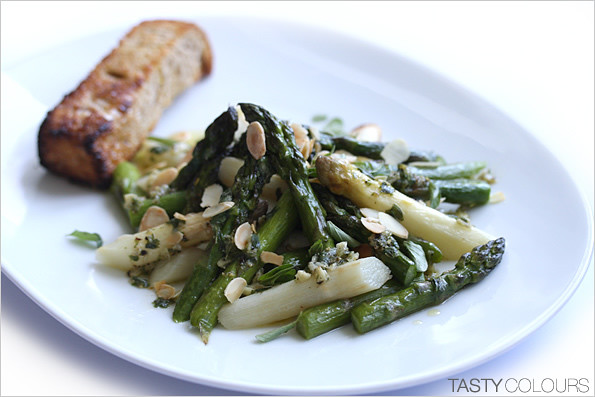
White and Green Asparagus Salad with fresh Oregano Dressing

Serves 4 as a starter or 2 as a regular lunch meal


Ingredients
1 bunch white asparagus (around 500 g)
1 bunch green asparagus (around 500 g)
4 big garlic cloves, peeled and finely chopped
1 handful fresh oregano leaves
Few tablespoons good quality olive oil (around 50 ml)
Salt
Quite a lot of freshly milled black pepper (around 1 flat tea spoon)
1 tablespoon white wine vinegar
1 handful sliced almonds or pine nuts


1. Wash asparagus and oregano. Dry them.
2. In a hot frying pan grill sliced almond or pine nuts for 1 to 2 minutes. Be careful not to burn them. Put them aside to cool down completely.
3. Prepare the asparagus: break them or cut off the wooden, dry parts of them and discard them. Peel white asparagus with a peeler and if necessary, peel delicately the thicker part of green asparagus stems (sometimes those thick green asparagus have a quite hard stem which does not cook very well). Try to choose white asparagus of the same thickness as the green ones, otherwise the cooking time will vary the two.
4. Preheat the oven to 200°C. Place asparagus in a baking dish, pour some olive oil in the dish and rub them with it (do not forget to rub the tips as well, so they do not dry out). Put into the oven and bake until soft or al dente (I prefer this last option). Occasionally check them and mix them so they grill / bake evenly.
5. Prepare your dressing: in a mortar or in a bowl, mix olive oil with half of oregano leaves and mash it slightly. This will help to extract the flavor of the herb. Add garlic, white vinegar, salt, and quite a lot of freshly milled black pepper. Taste if it is spicy and sour enough. In the meantime, grill or toast you favorite bread.
6. Remove the asparagus from the oven. Cut them into shorter pieces and place those on a plate (if you have more time than me today, you can create the rosette as indicated above in this post). Pour your dressing over; add sliced almond or pine nuts and the remaining leaves of oregano. Eat and enjoy.


Bon appétit!

Tuesday, July 12, 2011

A Big YES to Polish “schabowszczak”

On 1 July 2011 Poland took over the Presidency of the European Union. Poland will hold this Presidency for another six months. I am not into politics lately (especially, that the Presidency started with a little scandal in the European Parliament), but I am vividly interested in one aspect – meaning - cooking. 

Adam Chrząstowski, chef of the restaurant Ancora in Kraków designed a special menu which will be served at high level meetings during the Presidency (he has been appointed as an expert in the Department of Coordination of Polish Presidency in the EU at the Ministry of Foreign Affairs of the Republic of Poland).

What will this food, presented to European officials, be like? For sure, it will not be Italian, it will not be pan-European or “multi-cultural”, it will be, as the chef puts it, “Polish, in a new, or rather “forgotten” version”.

So, everybody, let’s forget about pierogi, żurek and “kotlet schabowy” (pork’s cutlet) – the symbols of the Polish, socialist, cuisine of the proletariat. No place for that. The Polish Presidency is a great moment for the promotion of Polish culinary traditions, Mr Chrząstowski says, so let’s focus on promoting the forgotten aspects of Polish cooking – meaning aristocratic and bourgeois cooking, which was based on such products as game, poultry, forest fruits, forest mushrooms and soft water fish. Well, that’s fine.

A few weeks ago, I had a chance to translate a culinary brochure which is to be published in France (and in other EU countries) in connection with the Presidency – the brochure contains about 20 recipes from renowned Polish chefs (including those who experiment with molecular cuisine). The purpose of this little cookbook is not only the promotion of Polish cuisine, but also the promotion of Polish specialties and products like, for example, strawberries (Poland is the seventh largest producer in the world), sour cucumber, beetroots, potatoes, poppy seeds, game, buckwheat, tvarog, apples, herrings etc.

That is why, maybe a bit perfidiously, I am proposing today a symbol of socialist cuisine - a pork cutlet called here, in Poland, “kotlet schabowy”. I know that the dish is not representative enough for the promotion of Polish food during the Polish Presidency. I realize this is a type of preparation that was lifted, during communism, to our national dish. But remember: although it is neither too healthy nor elegant, nearly everybody loves it.

This flag meat dish of socialist Poland, was usually consumed, along with “rosół” (broth with noodles), on Sunday “obiad” in nearly every typical Polish family. I read that the career of the Polish cutlet probably started in the XIXth century. After World War II it became a symbol of equality of socialist cuisine for all social classes, where shortcoming in delivery of any type of meats was normal.
The cutlet, friendly called as “schabowy” or “schabowszczak” is still the king of meat dish served in cantinas, in cheap joints, in fast foods and even in some good restaurants. And it is usually served with cooked or sour cabbage and potato purée.

There is one small detail though, which I will try to explain as simply as I can. Firstly: nearly everybody in Poland likes a good “schabowy”. Secondly:  there exists in Poland a part of society (let’s simply call them the “traditionalists”) whose culinary imagination starts and ends with “schabowy”. As you can read in Karolina’s post (the story, unfortunately, is not available in English) these people are called “kotleciarze”.
Remember this very accurate term. KOTLECIARZE ! It is not so easy to explain what it means. I will try, however, quoting Karolina.  So, first of all, “kotleciarz” is a play on words coming from the word “cutlet” (“kotlet” in Polish) and literally it simply means a “person who eats cutlets”. But there is a double, deeper meaning of that term. The “Kotleciarz” (cutlet eater) has a special mentality. For example, as Karolina writes in her blog (and I agree with that), when the “kotleciarz” goes abroad on holidays (let’s say, to Egypt, Tunisia or Italy) he will be complaining that one cannot find a breaded pork’s cutlet in hotels’ menus. When invited to enjoy a delicious lemon and parsley linguine dish, the same “kotleciarz” will complain that “this spaghetti is bizarre, because it lacks meat and red sauce”. The “Kotleciarz” is absolutely suspicious about every food, except for that one cooked by his mother (or eventually his wife).  Once the “kotleciarz” visits Spain, he will not want to try any tapas, and will rather be searching for places serving “fish and chips”. and for example, the “kotleciarz”  living in Strasbourg, France (close to the German border) will not try foie-gras, lamb, or any other disgusting French food – he will rather go shopping in Germany, to buy sauer kraut, tvarog and sausage. As Karolina writes, “kotleciarstwo” is not only a culinary habit; it is also a state of mind. To sum up: I like cutlets, but I hate the “cutlet” mentality.

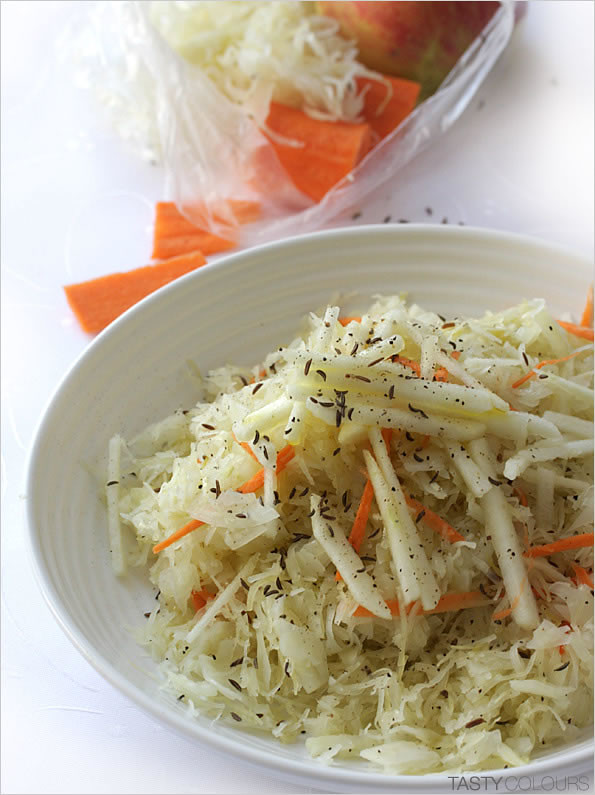
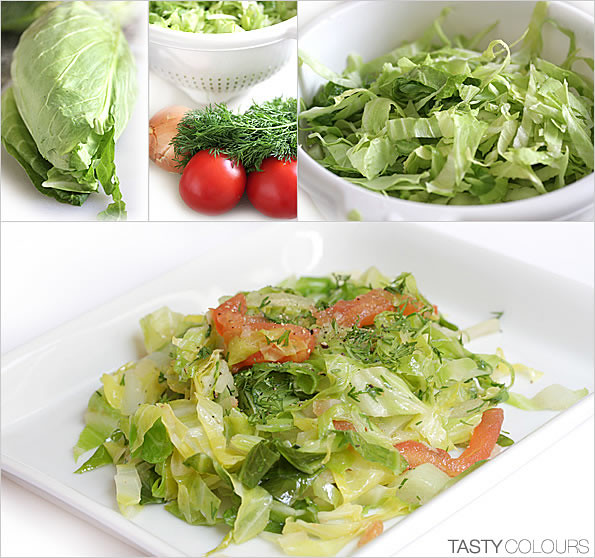
Today’s cutlet is accompanied with sauerkraut salad. However, it also goes well with shortly braised young cabbage. Sauerkraut may be bought everywhere in Poland (meaning, in every shop, all year round). Abroad, one can find it in stores carrying Polish or Russian food items. On the other hand, young cabbage is a seasonal product and may be found only in late spring or at the beginning of summer. Young cabbage braised with some tomatoes and sprinkled with dill is a very popular summer accompaniment to meat dishes. Often, bacon is added; today I present it with some tomatoes and a lot of fresh dill.


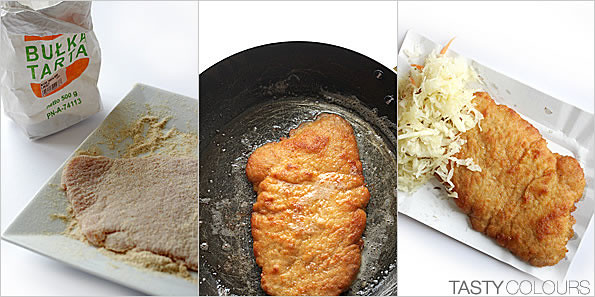
Breaded pork’s cutlet – “kotlet schabowy”


Serves 4

Ingredients:

600 g pork’s cutlet (boneless – some people prefer them with bones – do as you wish)
2 eggs
4-5 tablespoons butter
2 tablespoons olive oil / vegetable oil (a lot of people also use pork’s back fat)
150 bread crumbs (some also use flour, I do not think it is necessary)
Salt
Pepper

If using chops, trim off fat and gristle. If using tenderloin, trim off fat, remove silver skin and cut into 4 equal pieces. On a cutting board, pound pork between two pieces of plastic wrap to around 0,7 cm. Remove from the plastic film. Salt and pepper the meat.
Prepare two plates. Break the eggs into the first plate and beat them with a fork. Pour bread crumbs into the second plate. Dip each cutlet firstly in the egg, then in bread crumbs.

In a hot frying pan, melt the grease and once it reaches frying temperature, place the cutlets and fry them for around 5-6 minutes over a medium flame on each side (pork meat must be well done). Serve with potato purée and a cabbage salad or young cabbage (recipes below). .


Sauerkraut salad


Serves 4

Ingredients:
400 g sauerkraut (available in stores with Polish or Russian food items)
1 sour apple, peeled, washed and cut into julienne, sprinkled with lime juice
1 small carrot, peeled, washed and cut into julienne
1 onion, peeled, washed and finely chopped
½ teaspoon caraway, blanched in boiling water
4 tablespoons vegetable oil
Salt
Pepper
Sugar

Squeeze the cabbage in hands to remove the excess of sour juice. On a cutting board, chop the cabbage quite finely and place it in a bowl. Add the apple, carrot and onion. In a glass, mix oil with caraway, a pinch of sugar, salt and pepper. Pour into the salad, mix very well and serve as an accompaniment to your lovely cutlet.


Young cabbage with dill


Serves 4

Ingredients:

1 medium young white cabbage – around 600-700 g, finely chopped, the stalk removed
1 large onion, peeled and finely chopped
2 ripe, medium tomatoes, blanched and peeled, cut into quarters, seeds removed
1 bunch finely chopped dill
3 tablespoons olive oil / vegetable oil
2 tablespoons butter
2 tablespoons lemon juice
Salt
Pepper
A pinch of sugar

Pour oil into a large saucepan. Add onions, sauté them until quite soft. Add cabbage, mix and cook over a medium flame for about 15 minutes. The cabbage should release some juice. Do not let the cabbage burn. If necessary, add a bit of vegetable stock or water.
Add tomatoes when the cabbage becomes a bit transparent and soft.  Mix everything and cook for a maximum of 10 to 15 more minutes.  Add butter and mix. The cabbage should not be overcooked (this is how I like it).
Before serving, add lemon juice and dill, season with salt and pepper according to your taste.

Wednesday, June 15, 2011

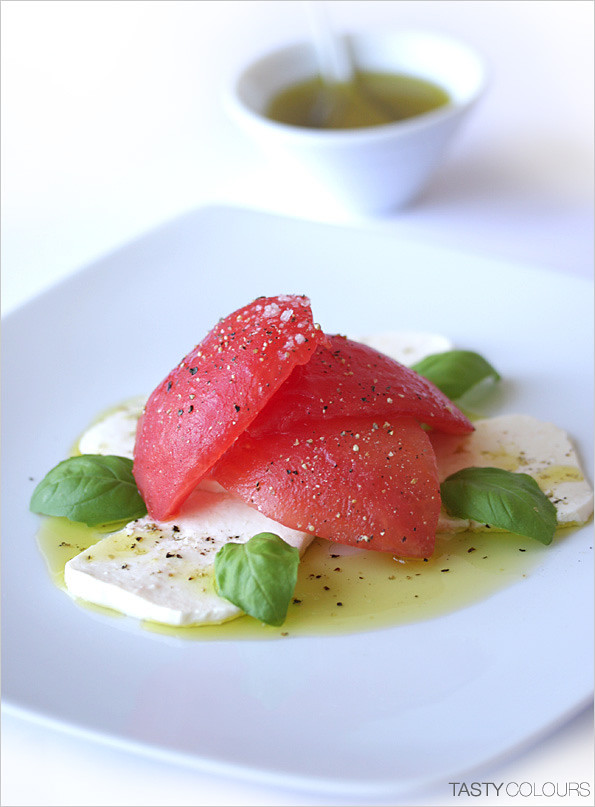
Polish Style “Caprese”

So. Italians have their World famous Caprese. This little salad is also popular in Poland and commonly served as a starter in thousands of Polish restaurants, not only those specializing in Italian food. The salad is usually served with industrial mozzarella produced by huge international companies. Its texture resembles chewing gum. And it is tasteless. People who know Italy say that fresh mozzarella is good only there; it hates transportation, and should not be stored for a long time (and this one we can buy here in Poland has a long shelf life; of course, I buy it to use it in pizza or toasts, but I avoid eating it in salads).

Why, instead of those poor imitations of Italian food, something simple with fresh local and seasonal products cannot be found easily in our foodie places? Ok, I saw a Polish style caprese once – around 10 years ago in one of Kraków’s resto-bars. And I do not know if it is still served there, because I do not go there anymore (but I will check it out, especially for you).

A Polish version of caprese could be prepared, for example, with some local cheeses such as “bundz” - from the south of Poland, which I already presented a few times on my blog. The season for bundz already started in May. Another cheese called “koryciński” from the eastern part of the country (it is already sold in Kraków, for example on Kleparz market) or just fresh-home made tvarog, the most popular Polish cheese.

So, those cheeses may be accompanied by tomatoes, fresh herbs like thyme or basil, olive oil or … Polish artisanal and organic oil made from plants that grow in Poland: for example: cold – pressed linen oil (remember that cold pressed linen oil should not be used for frying and it should be used within a few weeks after opening of the bottle) or erucic-acids free cold-pressed organic colza oil, which is extremely healthy (sometimes called the “olive oil” from the North) – still not popular, but both available in good stores carrying organic food. The flavor of those two oils is particularly strong; if one does not like it, just use olive oil et voila!

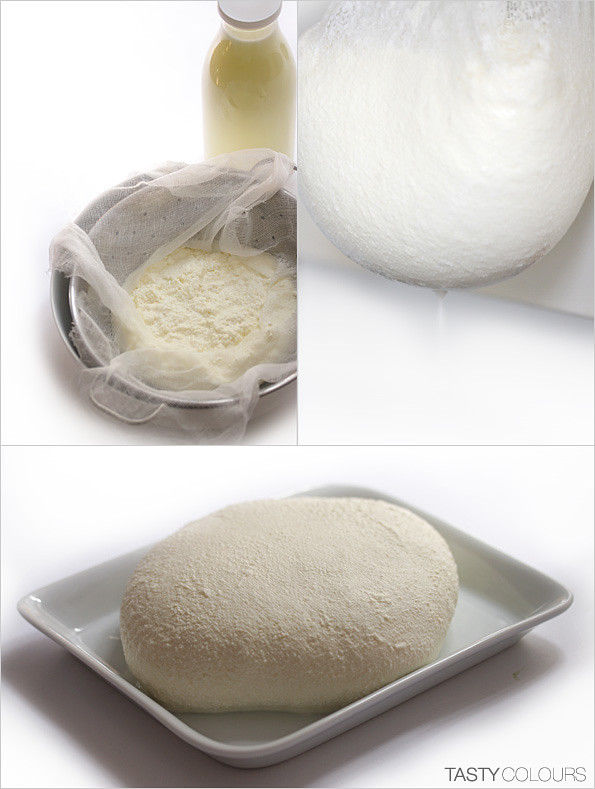
Tvarog is a fresh curd cheese made from cow’s milk. I remember from my childhood how my mom made it during our holidays in the countryside. In those times, access to fresh, raw and non pasteurized milk straight from the cow was not a big deal, like it is nowadays. Even in Kraków, a bottle of fresh, raw milk could be dropped off to your door step every morning. This milk was delivered, I remember, by an athletic and bearded guy who had a habit to climb the stairs with the speed of light (probably training for some sort of a sport). He always sweated like a pig. So, coming back to tvarog - it was traditionally made from warmed, non pasteurized milk “straight from the cow”, which was naturally getting sour. My mom was just leaving this milk in a jar or a stone bowl, then once it became sour (soured milk – “zsiadłe mleko”, “kwaśne mleko” is a sort of a popular drink in Poland), it was poured into a linen cornet and placed in a press (one can just use a stone or something heavy) to eliminate the whey (runny leftover liquid after curding the cheese) and to shape it as a triangle with oval edges.

Tvarog has a bit of a dry texture; it may be sliced, crumbled, whipped with cream or yoghurt, mixed with fresh chopped herbs and veggies,  etc.  It is used in pastries - for cheesecakes, in cooking (for example, dumplings – pierogi, pancakes (“naleśniki”), and sandwich spreads. It may be eaten in a sweet version with honey, confiture etc.

Some say this cheese is not even worth mentioning, as it is tasteless and worthless. I am not quite convinced. Good quality, or home made tvarog can be delicious; it just needs a little accompaniment, like a slice of bread with a crispy crust, salt, pepper, herbs etc. 

Tvarog, in its various versions (full fat, medium fat, light) is usually sold in blocks (one can also buy grind tvarog in plastic boxes). Unfortunately, as food in Poland becomes more and more industrialized, it is not so easy to find one of a good quality.

The French do not know tvarog. They do know how to prepare “fromage frais” which is different from tvarog and which cannot be used in Polish cooking (as it is too liquid). One Tvarog I found in a Polish store in Paris was not good (with a shelf life of 3 weeks). As a result, when I was in Paris, I started to experiment with home – made tvarog. I used tens of recipes (some using milk only, another adding yoghurt, kefir, cream, butter milk). There are hundreds of recipes for tvarog.

The recipe from my “Parisian period” below is a compilation of various recipes that I found on the web, including Polish Galeria Potraw. What came out of my experience in home preparation of tvarog is that everything counts – the quality of milk (after a few non-satisfying attempts, I found out that the best milk was an organic milk of the great Bernard Gaborit, cream, etc, and nearly every time this cheese came out differently (sometimes more acid, sometimes sweeter) etc. Depending on the volume of milk, the cooking and straining time may quite vary. I like it when it is fattier, so I add cream, but you can easily omit it or replace it by more buttermilk, for example. 

Polish Style Caprese


Serves 1

Ingredients:
4 thin slices of fresh bundz cheese, or koryciński cheese (about 100 g); or 4 thin slices of home-made tvarog (recipe below)
1 medium, ripe tomato
A few nice leaves of basil
1-2 tablespoons olive oil (if you have access to organic cold – pressed linen or colza oil, try to replace olive oil by one of the aforementioned)
Salt
Pepper

1 Blanch your tomato in boiling water. Peel it, cut into quarters and remove the seeds.
2 Place slices of cheese onto a plate. Place tomato quarters on top. Pour oil according to your taste; add a bit of salt and quite a lot of pepper. Decorate with basil leaves. Eat immediately and enjoy.

Home Made Tvarog


Makes between 500 g and 550 g (depending on how the cheese will be drained)

Ingredients:
1 liter full fat, non-pasteurized milk (the best is raw, fresh milk to be bought in shops carrying organic food or from “milk-machines”, if you have one in your town/city/village)
1 liter butter milk (most preferably, organic, with no additives)
250 g heavy cream, non pasteurized, of a good quality
125 g natural, non sweetened yoghurt (the best is organic, without any addition of powdered milk)
1 m2 gauze (or cotton diaper)
2 saucepans

Pour milk into a large saucepan and heat slowly until 40 degrees. Switch the heat off.
Pour it in a large bowl (do not use a metal bowl).
Add butter milk, yogurt and 125 g of cream. Mix everything until it is homogenous.
Cover the milk and put aside in a warm place (the desired temperature should be between 20 and 24 degrees) for about 36 hours, or even 48 (depending on the temperature in the kitchen). The liquid should have a sour taste and should thicken.
Once it is soured, add the remaining 125 g of cream and mix delicately.
Delicately pour soured milk into a saucepan.
In a larger saucepan (rather flatter than higher) bring water to a boil.
Then reduce the heat to a minimum, and place the saucepan with milk in the saucepan with boiling water.
Heat the curd delicately, over minimum heat, between 30 to 40 minutes (this is an individual matter, you really have to be careful!).
From time to time, check with a spoon whether any curd has separated from whey, not only at the edge of the saucepan, but also in the middle.
You should be more careful after 25 to 30 minutes of the curding process. The best way is to taste. You should see little curds on top of the saucepan. The curds should be a bit sweet with a rustic sour aftertaste (the taste, however, always depends on the quality of milk, yoghurt and cream) and they cannot be chewy, gummy nor too hard, otherwise the cheese will not be good.
Then prepare a strainer and the gauze.
Place a strainer, covered with a piece of gauze, in a large bowl. Pour delicately the mixture into the strainer. Be careful – from this amount of milk you will obtain about 1.5 liters of fresh whey. You can throw it away, but you might as well drink it cold (as it is supposed to be very healthy), or use it as a base for soups or even in bread baking.
Once you strained your cheese, remove the strainer with the gauze and place it on a plate.
Knot two opposite ends of the gauze (be careful for the cheese not to fall) and hang it over a bowl for draining. Depending whether the texture you want (cottage cheese for tartines or rather hard cheese, for example, to use as a filling for pierogi ruskie), drain the cheese between one hour and 1.5 or even more. You can also place the cheese in gauze between two cutting boards and squeeze it with something heavy.


Friday, December 24, 2010

Merry Christmas!


Should you ask me what is my most memorable episode from Polish Christmas when I was a kid – I would not mention a Christmas tree (we always had one, of course), or gifts (which we were offered), or the extraordinary cleaning of the apartment one month in advance, or the preparation of the Christmas dinner for three days in a row (which was actually the case), or not going to school and even not playing and singing Christmas carols, handling family meetings and so on – but rather « hunting » a carp, a soft water fish probably most appreciated in our region, and maybe in China.

In the eighties, when I was a kid, we had been suffering from food shortcomings - I mentioned this to you already. The preparation of tasty Christmas meals was - for a family living in a city like Krakow - a challenge. We had to spend long and boring hours in lines at food stores. A lot of basic food products, like sugar and meat, were in limited supplies. Even to purchase a carp fish was not easy. Additionally, the poor fish were taken home a few days before Christmas Eve and they were being kept alive in.... bathroom bathtubs. This may be the most common picture of any Polish home before Christmas: fish in the bathtub! .... Then the fish was murdered by the parents one or two days before the Christmas Eve. A blister of the fish was placed on a heater so it could explode with a noise to children’s pleasure. The fish's scales were washed, dried and placed in wallets - for good luck in the coming year. Indeed, that was a cruel habit – the animal was killed in a non humanitarian way, which nowadays is stigmatized in some Polish TV campaigns.

As far as I know, the carp was, in old times, a fish for poor people; then, it became an eminent part of Polish culinary traditions after the World War II and a proletariat king on Christmas tables. It replaced nobler soft water fish like sander, eel or pike. On the other hand, due to the development of Polish species of carp (for example, karp zatorski), the carp remained an eminent ingredient of our Christmas traditions. And you know what? I like to eat it once a year.  If you visit Poland right before Christmas, you will notice in nearly every food store a huge bathtub or a plastic pool with carps swimming inside it.

The Polish Christmas Eve (“Wigilia) menu is very traditional. I know of some atheistic families whose Christmas menu is the same as in families practicing the Christian religion (which dictates for example, that absolutely no meat should be eaten during the Christmas Eve dinner). There are some dishes that we (or I) eat once per year, the preparation of which often takes a lot of time. Despite historical changes (like for example the expatriation of people whose families lived behind the Bug river), those dishes will probably be served for the Christmas Eve dessert in some regions of today’s Poland - kutia (a dessert having its origins in the Ukrainian territory).


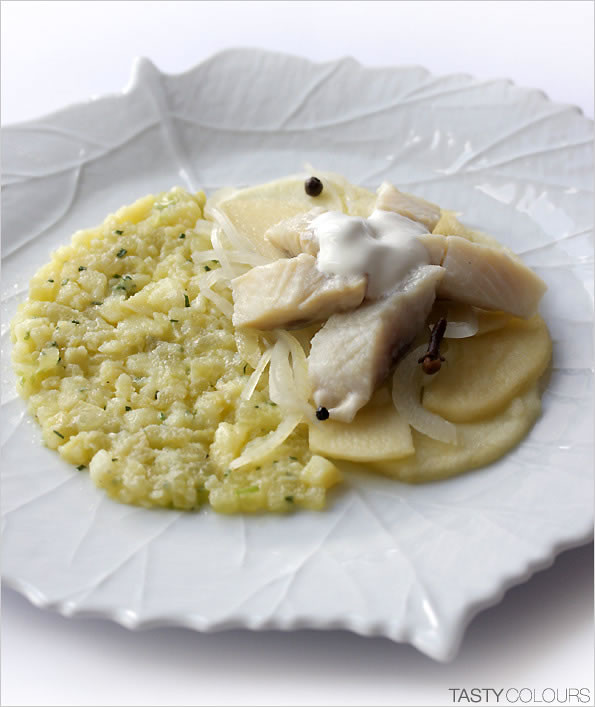
Christmas Eve in my family was preceded by a fast, meaning that we did not eat meat on that day. A light lunch consisted of tasty herrings marinated for a day or two in boiled, white vinegar, spices, onions, sour apples and then served sprinkled with thick cream, accompanied by a potato salad, with  sour cucumbers and chives.


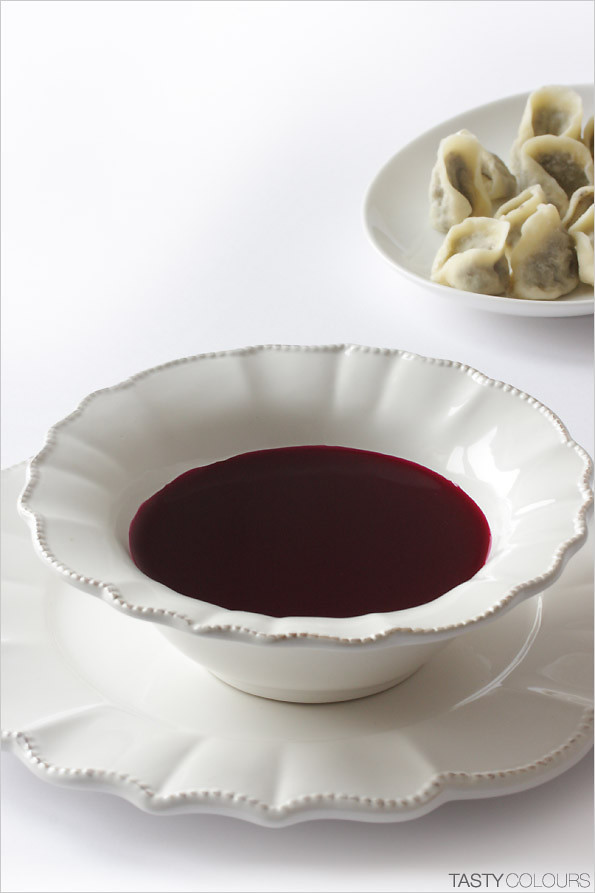
Christmas Eve dinner in many Polish homes and in my family started with a beetroot soup (borscht). In some families, the vegetarian version of a mushroom soup made from dried forest mushrooms is also served; however, the Christmas version of the borscht in my family home varies a lot from a regular one which is made from cooked beets. In general, everything as regards the traditional Polish Christmas Eve may be summarized in a few words: sauerkraut, dried forest mushrooms, carp, beets, dumplings, herrings and poppy seeds.

The Christmas borsht soup has been made from a base that had to be prepared a few days in advance (you will find the recipe in this post). The base consists of raw beets, peeled and cut into slices, pickled in boiled, chilled water with garlic, for four to five days. Then this « starter » is mixed with a light broth made from dried ceps and vegetable broth. The soup cannot be boiled; otherwise its color and taste will change. First records about the soup probably date from the beginning of the XVIth century. So, people – eat beets, eat beets! They are not so awful. Even nowadays, the soup in its luxury version is often served in elegant parties, weddings and occasional feasts, although usually with some meat stock.

The common, daily version, usually served with potatoes or hard-boiled eggs, can easily be made within a few hours by simply cooking the ingredients and adding vinegar or lemon juice. However, the traditional way is to prepare the soup several days in advance and to allow it to get a natural sour taste. Of course it is possible to buy a concentrate in shops or on local markets, but homemade base is always better, as you can control the taste and the level of fermentation.

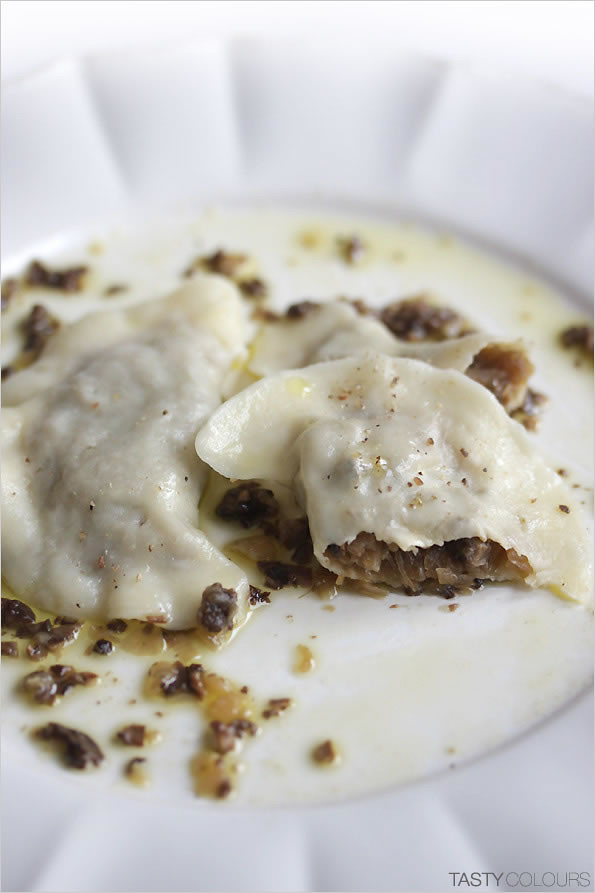
In my opinion, traditional Christmas borscht goes best with tiny dumplings stuffed with a preparation of soaked dried ceps and fried onions. These are called « uszka » in Polish. A direct translation means “little ears” and that is the shape you are aiming for. Some of the secrets to prepare really delicious uszka is to roll-out the dough as thin as possible, to shape them as small as possible, and then, finally, to use dried ceps of a good quality.
It is a pity that those delicious dumplings are practically unknown abroad. Although it is a lot of precious work to do them, I really like to make them (maybe because I do this only once per year). You can order uszka all year round in almost every restaurant serving Polish food. However, they may not be good everywhere. First of all, the uszka dough usually is much too thick, and secondly, cheaper restaurants use a mixture made of cheap button mushrooms and of a small quantity of dried bolets. Therefore, before ordering this dish you should ask first what kind of mushroom has been used for the filling.

After the soup, pierogi (dumplings) stuffed with braised sauerkraut and/or sauerkraut and dried mushrooms often appeared on our table. This is a type of pierogi that one can meet quite easily all year round in Poland, however I eat them usually around Christmas time. In some homes, people eat pierogi with poppy seeds.


Since the early nineties we had been invited to spend Christmas Eve at my mum’s closest friend, Ewa and her family.  This is where I acquired the habit of eating a vegetarian version of the popular “gołąbki” (stuffed cabbage rolls with kasha or rice and dried mushrooms in its vegetarian version).


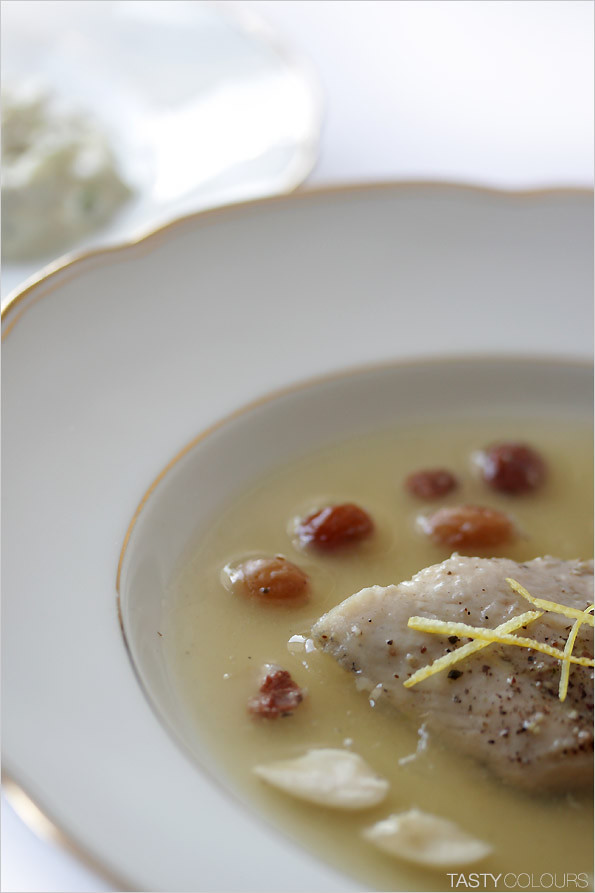
Both at Ewa’s place and in our home, the carp fish was served in two different versions. The first one is a cold fish in jelly, often called Carp Jewish Style – a dish which probably finds its origins in the cuisine of Eastern European Jews. Pieces of fish are cooked slowly with almonds and raisins in a fish stock, then eaten cold with natural jelly and soft bread.
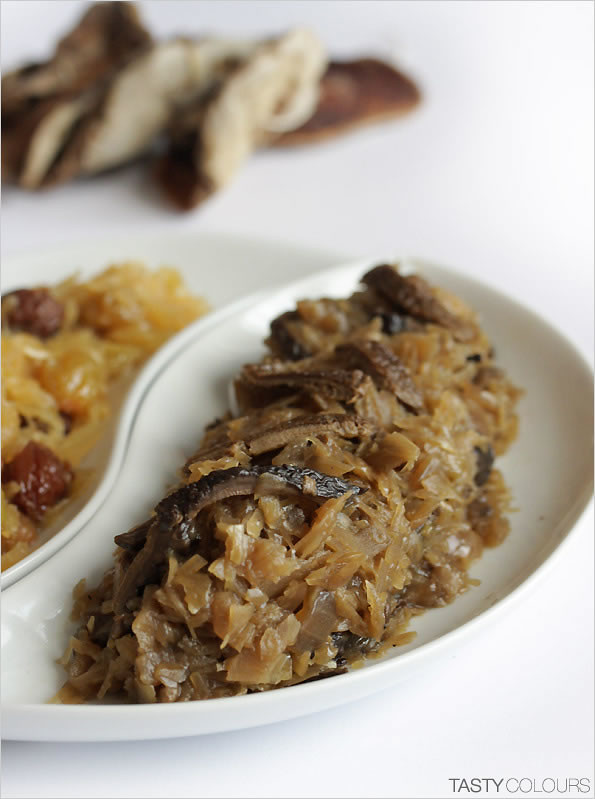
The second carp dish was served very simply, breaded and accompanied by hot sauerkraut with dried mushrooms and raisins, a vegetable salad or a potato salad – and usually nobody spoke a word when eating this fish, as it has a lot of bones.


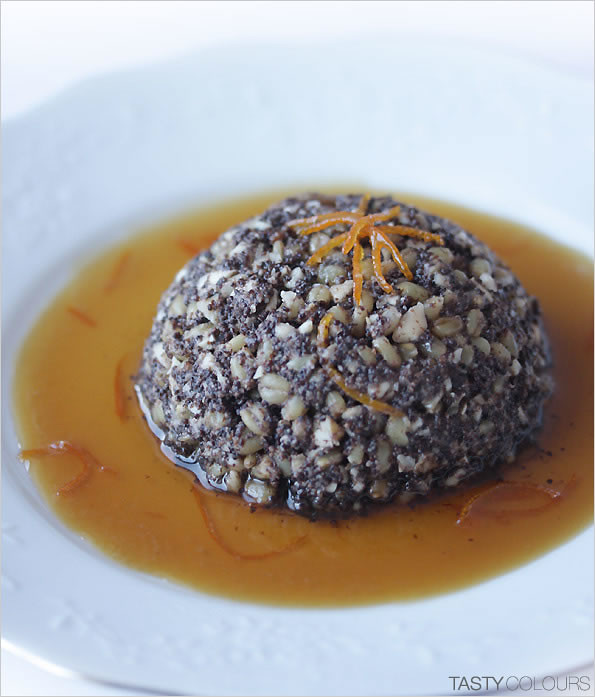
Christmas Eve’s desserts were less important to me as I do not like sweets too much. Except for one thing: small, buttery pastry dough cookies made from whipped egg whites and from the addition of lemon juice on top, according to my grandma’s recipe. Besides that all those traditional cakes with poppy seeds, dried fruits or candied fruits, as well as kutia - a dessert which came to us through Polish people who were expatriated, after the War, from today’s Ukrainian territories, had no existence for me.


At the end of Christmas Eve, my mum used to serve compote - kompot - a drink made from cooked dried, smoked fruits: plums, apples, pears, raisins, apricots, the purpose of which is to speed-up digestion.

Christmas Days

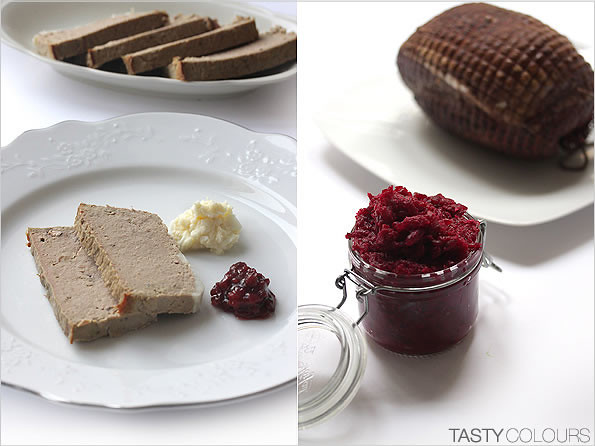
In Poland, Christmas lasts for nearly three days: Christmas Eve (Wigilia), starts at around 5 p.m. (when the first star appears in the sky), it then continues for two more days. A typical and traditional Polish Christmas Day breakfast, which was celebrated in my family, consisted of a good assortment of charcuterie - cooked hams, sausages, pates, served with accompaniments such as pickled ceps, horseradish with eggs, tartar sauce, a spicy and cold beet-horseradish salad called “ćwikła” and lingonberry preserves.


A traditional vegetable salad also comes with all that. It is made from cooked root vegetables like parsley, carrot and celery root as well as potatoes, sour cucumbers and apples.


Then cakes always appeared on our Christmas table. Contrary to Christmas Eve, when meat is not allowed, on Christmas day the main course (obiad) consisted of meat like duck, veal, beef, goose or leftovers of fried carp from the previous day, served with cabbage or with some other accompaniments, followed, again, by cakes and cookies. Then, for dinner, cold charcuterie and accompaniments were served, as they were for breakfast.
In Poland, the second day of Christmas is celebrated as well, and people do not work, so the gluttony continued for one more day, interrupted by family visits and walks.

New Years Eve

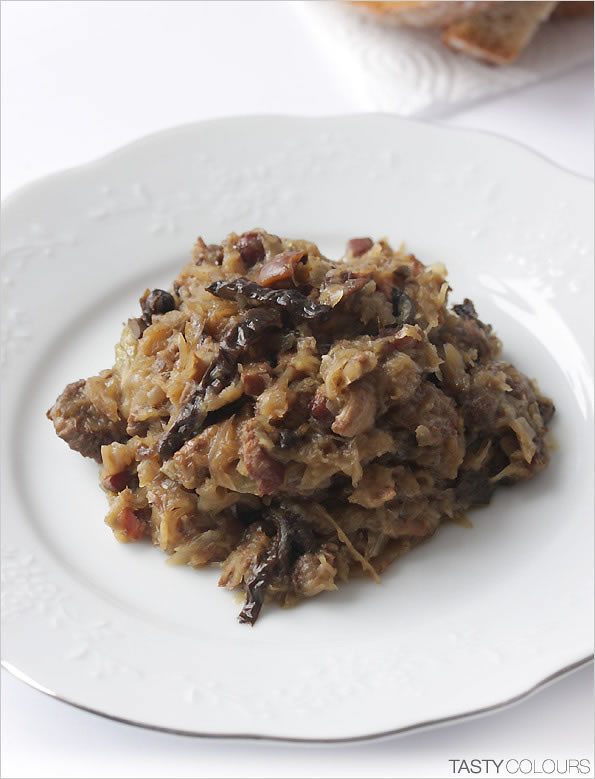
The meaty leftovers from Christmas meals are used to prepare bigos – a hunter stew cooked very slowly (most preferably, for two or three days) using several types of meat, sauerkraut, dried mushrooms, dried plums, red wine and a lot of spices. In its extraordinary version a bigos is cooked in my family between Christmas and New Years Eve, and is eaten on New Year’s day – as a good solution for hangover, should anybody had one.


Bigos is a traditional stew typical of Polish and Lithuanian cuisines. Many consider it to be the Polish national dish.  Indeed, bigos has a long tradition in Poland. Some say that first traces about bigos can be found in the middle ages. It is said that bigos has been introduced to Poland by Jagiełło, a Lithuanian prince who became king of Poland in the XIVth century and founded the long-lasting union between the two states. However, Polish linguists trace the word bigos to be of a German origin rather.
In old times, bigos was stored in every household’s pantries in big stone pots, ready to be served to unexpected guests or as a provision for long trips. Should anyone ask me about the most traditional and the most pauperized Polish dish during the communism – the answer is bigos.  As nearly everything in Polish cooking after the Second World War, this old and rich dish was brutally simplified due to, inter alia, food shortcoming and political concerns. I can remember a version of bigos served in my school cantina as a few slices of meat of poor quality swimming in half-raw sour cabbage. This has nothing to do with real bigos, which needs many ingredients and a long cooking time.  Even today, in many cheap restaurants or “milk bars” you can order an ersatz of bigos, which usually translates into a preparation of cooked cabbage with a bit of sausages. 

There exists many variations of this dish and the one that I present in my book is the one I learnt from my mom.

There is no standard recipe for the dish. There are, however, certain rules to make it properly: it requires a long cooking time; different types of meats are to be used; the addition of dried plums, mushrooms and spices is required. Recipes vary between regions and families. Typical ingredients include sour cabbage, sometimes as well white cabbage, various cuts of meat and sausages, tomato paste and honey, sour apples, mustard and wine.

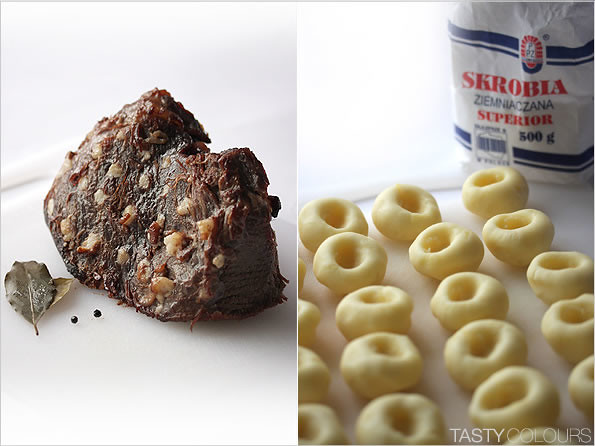
Sylvester dinner was usually celebrated in my family serving a hunter’s style beef tenderloin – “pieczeń wołowa na dziko”. A piece of beef was pickled for two to three days in wine and vinegar, then baked and served with « silesian dumplings » (“kluski śląskie”) - a sort of potato flour oval gnocchi, and lingonberry preserves.


CHRISTMAS EVE BORSCHT
Barszcz Wigilijny


Serves 8

Ingredients:
For the starter (“zakwas”)
2 kg (4.4 lbs) hard raw beets, peeled, washed and cut into slices
8 medium garlic cloves, peeled and cut in halves
1 teaspoon sugar
½ teaspoon salt
2.5 liter (2.6 quarts) boiled and chilled water
1 jar (3 liter (3.2 quart) capacity)
1 gaze or a piece of cotton fabric, to cover the jar

For the mushroom-vegetable broth
40 g (1.4 oz) dried ceps
2 medium beets, peeled, washed and cut in slices
1 root parsley or parsnip, peeled, washed and cut in halves
½ small celery root, peeled and washed, cut into slices
1 carrot, peeled and washed, cut into halves
1 onion, peeled and washed, cut into halves
1 bay leave
5 grains black pepper
2 grains all spice
Salt
Pepper
1 tablespoon lemon juice (optional, if the soup is not sour enough)
1 teaspoon marjoram


1 Prepare the Starter: Place beets in a clean, sterilized jar. Add garlic cloves. Mix water with salt and sugar and pour into the jar. The beets must be completely covered with water. Cover the jar with gauze and put aside at room temperature between 20° to 24° Celsius (68° to 75° Fahrenheit) for at least 5-6 days. Check from time to time. If you notice foam on the surface of the liquid, remove it delicately with a clean spoon and cover again. The base is ready when it has a strong sweet – acid taste. Strain the liquid. Discard beets and garlic. Pour the starter into a jar or a bottle and refrigerate. It may be saved up to two weeks.

2 Prepare the Mushroom Broth: Place the mushrooms in a saucepan and add 1liter (1quart) of water. Let them soak for at least 2 hours (preferably overnight). Cook them in the soaking water, under the cover, for 30 minutes or until they are soft. Strain the liquid and reserve it for the Borscht. Reserve the mushrooms and use them for another dish, for example Raviolis with Ceps.

3 Prepare the Vegetable Broth. In a deep saucepan, bring to a boil 1liter (1quart) of water. Add beets, root parsley, celery root, carrot, onion, bay leave, black pepper and all spice. Cook covered over medium heat until they become soft. Strain and discard vegetables and spices. Reserve the broth.

4 Prepare the Soup: Pour 2 liters (2 quarts) of the starter into a saucepan and add the entirety of the vegetable broth and half of the mushroom broth. Heat up, but do not bring to a boil, otherwise the soup will change in color. Taste: the soup should be quite sour, with a garlic and mushroom aftertaste. If necessary, add a bit more of the mushroom broth. Season with marjoram, salt and pepper and simmer for 10 minutes but do not allow the soup to boil.

A good starter should be transparent, but deep in color and a bit thick in texture. The best is to prepare it from organic beets. There exist recipes where some rye bread is added for faster fermentation. I prefer to prepare my base only from beets and garlic, as nowadays it is not so easy to find whole rye bread without industrial additions. Never add any vinegar to season this version of borscht.

Uszka (little dumplings with dried ceps)


Serves 8

For the filling:

Ingredients:
45 g dried ceps
750 ml water
1 onion or 2 shallots, peeled, washed and very finely chopped
4 table spoons butter
1 table spoon bread crumbs
1 egg white
Salt
Pepper

Soak mushrooms in water for a night.
On a second day, cook them until soft for around 20-30 minutes.
Strain the mushrooms.
Reserve the mushroom water and use, for example, for the borscht or other soup.
Chop the mushrooms very finely and put aside.
In a hot frying pan melt butter, add onions and cook them on a law flame until soft and golden.
Add mushrooms, fry for a minute or two, salt and pepper generously. Put aside in a medium bowl to cool down.
Then prepare the dough for the raviolis (see page XX below)
Once the dough is ready, finish the filling for the raviolis: add bread crumbs and mix.
Then beat egg white and add to the mixture. Mix delicately.

“Uszka” dough (around 60-70 small raviolis)

Ingredients:
200 g flour, sifted ((have some extra flour handy to adjust the recipe and to work the dough and roll it out)
1 egg
½ tea spoon butter
60-150 ml room temperature water (add little by little)
1 glass of 4 cm diameter (for example, champagne or vodka glass)

Sift flour on your working table.
Form a well in the centre of the flour.
Place the egg, butter in the well and mix all the ingredients with as much flour as possible.
Then start adding the water, 2 tablespoons at a time.
Knead the dough so the water is completely absorbed before adding the 2 following tablespoons of water.
Should you add too much water, the dough will become sticky; in that case, add little by little the extra flour until the dough is no longer sticky.
Knead the dough for about 15 minutes; it should become smooth, soft and elastic.
Divide the dough into 3 equal parts.
Place the first part on your working table.
Wrap two remaining parts in a plastic film and put aside.
Sprinkle some flour on your station and start rolling out the dough until it is between 1 and 2 millimeters thick.
Occasionally, flip the dough and sprinkle some flour over it so it does not stick to the table.

When dough is rolled out, cut disks of around 3-4 centimeters using a cookie cutter or, if not available, a champagne glass.
Put the scraps of leftover dough together and gently knead to form a small ball.
Wrap in plastic film and put aside to roll out later.
Place about ½ teaspoon of stuffing in the middle of each disk.
The stuffing must not reach the edge of the disk or it will prevent the proper sealing of the raviolis.
Fold disk in half and pinch edges together – you will obtain a little pieróg.
Using indexes and thumbs join the two tips of the pieróg to obtain a shape of “an ear”, most closely to Italian tortellini.
Should the dough be too dry, it will not seal properly.
In that situation, use a brush to moist the edges of the disk, and pinch them together.
Place “uszka” on a flat dish sprinkled with flour, and cover with a light cotton towel.
Repeat to prepare “uszka” from second and third part of dough and scraps.

Cooking
In a large saucepan (5 liter capacity), bring to a boil 3 liters of water; add some oil and a flat teaspoon of salt.
Drop a few “uszka” at a time, bring again to a boil and reduce flame.
When “uszka” rise to the surface, let simmer another 2 minutes.
Taste one to check that the dough is well cooked.
Do not strain them; use a slotted spoon to remove them from water and place over a paper towel to remove the excess of water.
Serve immediately as an accompaniment to Christmas bortsch.

In this recipe, you can use other dried mushroom, like for example dried boletus. Although they are served traditionally with the borsht, you can eat them as an accompaniment to bullion or mushroom soup. You can even fry cooked “uszka” on a frying pan and served them as a hot starter, served with some butter and parsley.
The precooked “uszka” freeze easily, so you can the excess for other occaision.

CARP JEWISH STYLE
(karp po żydowsku)


Serves 4

Ingredients:
50 g (1.8 oz) whole almonds, peeled and cut into quarters
40 g (1.4 oz) dried raisins (preferably sultana)
600 g (1 lb 5 oz) fish bones (preferably carp heads)
3 medium onions (300 g) (10.5 oz), peeled and cut into halves
1 carrot, peeled and washed
8 grains black pepper
600 g (1 lb 5 oz) carp cut into slices (if unavailable, use another soft water fish like sander or Northern Pike)
A pinch of salt
A pinch of ground black pepper
A pinch of sugar

1 In a small saucepan, bring to a boil 150 ml (0.6 cup) of water, add almonds and raisins and cook them for 5 minutes. Then put everything aside.

2 Remove any scale left from the fish skin. In a large saucepan, place the fish bones and cover with 1.5 liter (6.3 cups) of water. Add onions, carrot and pepper grains. Cover with a lid and cook over low flame for about 1 hour to 1.5 hour. In the meantime, sprinkle the fish steaks with salt, pepper and sugar.

3 When fish stock is ready, strain it using a very fine strainer (preferably, a chinois); collect half the quantity of the onions and reduce them into a purée using a blender, and add to the strained fish stock. Discard all other solids. Add almonds and raisins and their reserved cooking water to the fish stock. Bring the fish stock to a boil. Place the fish steaks into the stock and cook for 10 minutes, or until the color of fish meat changes to white.

4 Remove the steaks from the stock and place them on a deep serving dish or individual deep plates to cool down. Strain the fish stock once again to remove any additional solids; keep almonds and raisins aside. Pour the cooled-down fish stock over the fish steaks; they should be covered completely. Place almonds and raisins around the fish steaks in a decorative manner.

5 Refrigerate overnight so the fish stock turns into a jelly. Serve with quarters of fresh lemon and bread.
Related Posts Plugin for WordPress, Blogger...