Friday, July 2, 2010

An Interview with Mr Bajon - Artisan Boucher

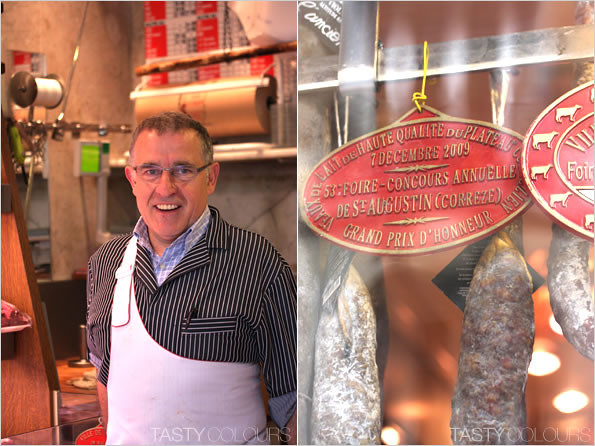
Do you remember that a couple of weeks ago, in my brief review of "Foody Places in the 6th Arrondissement in Paris", I mentioned in a few words the great artisan butcher shop of Mr Jean-Pierre Bajon, located at 29, rue de l’Abbé Grégoire, between rue de Vaugirard and rue du Cherche-Midi. Right before leaving Paris, I had a one hour chat with him, during which he revealed some more information about this quite rare profession. I hope you will find it interesting, as this man is completely crazy about meat (probably he was born with a butcher knife in his hand).  Mr Bajon is very French: he is absolutely convinced that French meat is the best in the World. I agree that all meat products in his shop are extraordinary; but on the other hand I must defend our Polish pink-red veal, which I love a lot, and which Mr Bajon does not have such a positive opinion of. 
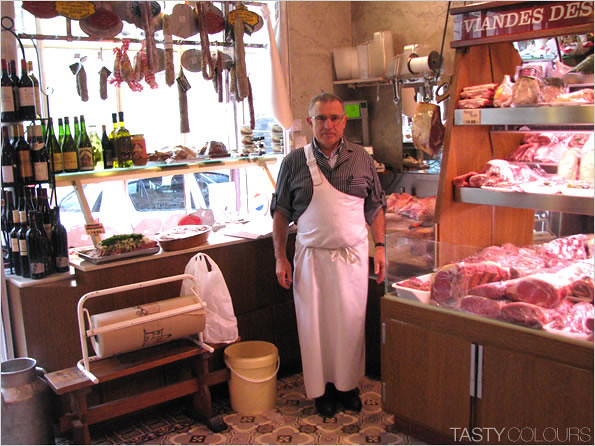

Mr Bajon, thank you for meeting with us in your back shop…
This is where I prepare lunch every day for my staff, and all of us have a bite together, peacefully.
It's a custom that we established because all of my colleagues live quite far away; this way, they don't have to commute at lunch time, they don't have to go to the restaurant, they just stay here, quietly and do whatever they want during their break. They also can watch TV if they wish. Then, at 3:30 pm, we go back to work. I live on the second floor (there is a staircase that connects directly to his apartment). So, go ahead, ask all the questions you wish!

Were you always here, in this shop?
I arrived here in 1982. When I revived this business which was bankrupt – it had completely gone down – I instantly liked this neighbourhood; it was quiet and business picked-up right away. So I stayed in this shop and 10 years later, I realized that I had built a reputation and thought it pointless to move anywhere else. It made more sense to remain here, and to pursue my career in this place that I liked so much. I did not find it necessary to change something that was working really well.
Further, my children were really young at that time and it was important for me to see them at lunch time. It was like in the old days, in an old fashioned butcher shop. This was especially important to me.
In fact, I feel that today my career rather is behind me (I will turn 56 soon) and I like it a lot here. It still is a small family butcher shop, like in a village although we are located in the heart of Paris. It's very friendly and we are lucky to be able to do a good job. The quality of the meat is outstanding and we provide a good service to our clientele. You know, what is really important is to be attentive to our customers. We are close to them, they chat with us and tell us their stories, but we are not nosy and, unlike what happens in the countryside, it does not go any further...

How did you enter this profession?
My parents were in the countryside, they were farmers, and when I was very young I already wanted to become a butcher; I always had an attraction to this profession.

In the Paris area?
No, I started in the Sarthe Region, In La Ferté-Bernard were I did my apprenticeship for 2 years. Then in 1972, I came to Paris where I did my entire career. These were really good moments of life and it is unfortunate that time flies so fast!

The quality of the meat is outstanding here; how do you choose your products and your suppliers?
At the beginning, it was quite complicated to find good products; I had to build my reputation. Nowadays, things have become much easier: breeders approach me and call me to say "I have an outstanding animal". I only accept the animal when it suits my requirements. This applies to beef, veal, lamb, pork and poultry.

Do you purchase your meat straight from the producers or do you go to Rungis?
In the past, I would go directly to the producers, but it was too complicated and it required a huge amount of work. During the past 15 years, new norms have been applied to the transportation of meat and to slaughterhouses regulations which have made getting supplies directly from the producers even more restrictive. Today, animals are first conveyed to the slaughterhouse by their breeders; they are then shipped to the Rungis central market to be sold.
I practically go to Rungis every day: on Mondays, Wednesdays, Thursdays and from time to time on Fridays as well; at least 3 or 4 times per week.
Generally, we go there for the opening of the market (we leave at 4:00 am or 4:30 am) because, should it happen that the meat that I requested does not suit me, the producer should be able to sell it there; it happens sometimes, although rarely.

Do you personally check the meat?
Yes I do, nobody does this on my behalf.

What are your selection criteria?
It's the result of experience, with the touch and the eyes.
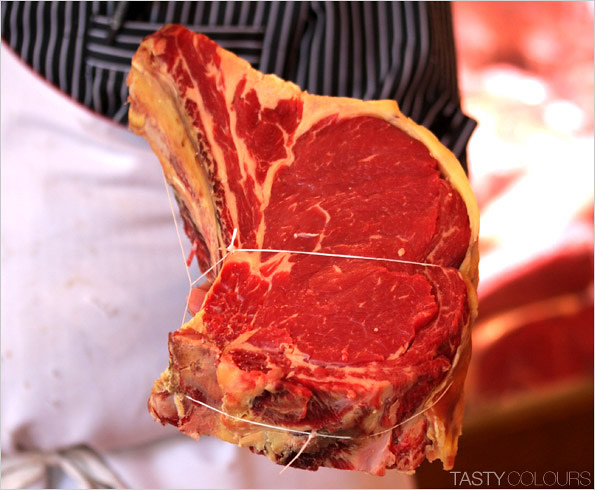
This is something that was taught to me and that I developed on my own. I have a gift for choosing the products, for watching carefully whether the meat is sound, greasy enough and that's important because we only carry greasy meats here, no lean meats. That's the type of meat that our customers prefer and we only trim the fat off when a client specifically asks for it.

What is the origin of this meat?
I exclusively carry French meat, and I am very cautious about that, even when foreign meat can be up to 3 times cheaper that the French one, I do not buy any. And this is something very important.

Can we say that the meat you sell is natural?
Absolutely, it comes from free range, pasture-raised animals. I only carry veal from calves suckled by their own mothers, and that have always been kept in the dark.
Good veal meat comes from calves which do not see daylight because should they start grazing grass, their meat will not remain white and will turn quite pink or even slightly red. This is why there are some places in the provinces, Corsica for example, where free range calves will provide red meat, as opposed to the one we work with here, with a complete different taste. Parisians in particular, like this white meat and always ask for it.

What about your poultry? Are your chickens hormones-free? Do you carry Bresse chicken?
We sell a lot of poultry from the Bresse Region: chicken, Guineafowl and several others, and free range chicken as well, pasture-raised and well fed.
We exclusively carry free range poultry and beef.
As regards game, the season starts in September and ends in January. The hunting season lasts 3 months. In October, November and December, we sell a lot of game.
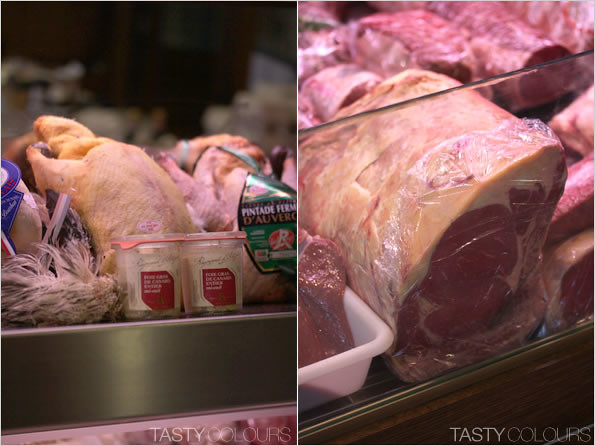
You also confection some products such as Terrines and Rillettes?
Yes, we get our supplies from a small producer of charcuterie (prepared meat products) however when he cannot provide me with the items I want, I make them myself. In that context we prepare our own rabbit rillettes, paupiettes (stuffed veal escalopes), salads and also ready-to-cook veal roasts, or "veal in pastry dough" (which consists of a nice veal roast that is flattened, we add raw ham, ground pork meat, mushrooms and reshape the roast). We make Italian Veal, Veal Roast with Sweetbread, Roast with kidneys and many other sorts of roasts.

You also carry sausages, andouillettes, hams...but do you make the ham with herbs here?
No, I get it from this producer who makes the white ham and part of my charcuterie, such as my blood sausage, my andouillettes, my sausages from Morteau, from Montbéliard, my Knackwurst (saucisses de Francfort). This charcutier does not like to be in contact with customers but he likes to work with products of good quality. He exclusively works for butchers and in the Paris area, he supplies a good 30 of them.
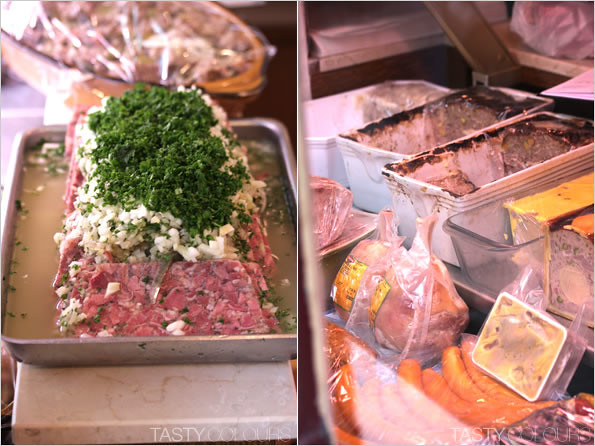
Is it possible to place unusual orders?
Yes we can work on any preparation you wish but we do not cook them here because we do not have the equipment and fixtures to do that. When a customer requests an Osso Buco, a Blanquette (veal stew), a Veal Roast with pistachios, a Veal Orloff, we can deliver!

Who are your customers? People from the neighbourhood? Any famous people?
Yes we see a lot of important people here and a lot of actors who, for the most part are epicures, who like to eat!
We have Jospin, we had Mitterrand, we have Arditi, Depardieu, we had Sardou... a lot of people from the entertainment business.
All these people come here early in the morning, so they are not bothered. They are attached to artisanal butcher shops like ours and they like to choose their products. Our job is particular, it's about preparing and cutting, it's artisanal.
I also have a lot of clients who come from the suburbs. About 50% of our clients live in the neighbourhood and the other 50% make the trip from the suburbs to our shop once a week, because of my reputation. They buy enough for 8 or 15 days and store the food in their freezers.
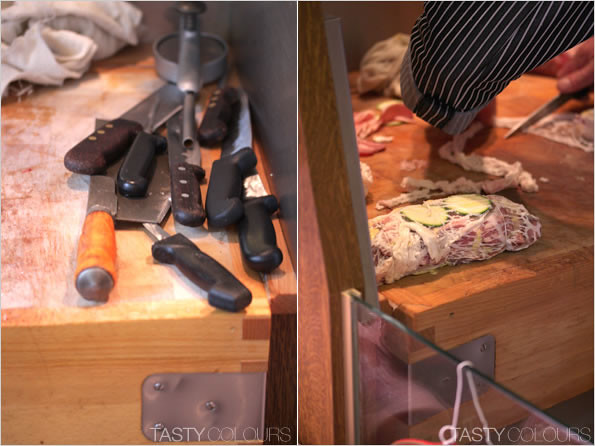
Are there lots of butcher shops like yours in Paris?
We are about 10 butchers of this quality in Paris, where you can find a total of 450 butcher shops. It is a fact that people in our neighbourhood have a higher per capita income compared to other parts of Paris. But there are lots of places in Paris and in the suburbs where people would like to have shops like ours.
There is a huge shortage in artisan butchers like us and it is unfortunate that there are not enough individuals curious enough to enter our profession which offers of real potential for success.
To become a butcher, or a charcutier for example, one needs a good level of education, and courage!
Unfortunately, it is not the case and I notice it in professional schools where I am a jury. The National Education System throws, into these manual professions, young candidates and apprentices who are failing at school. I think it is a shame! And I fight hard to change that.
However, I do not teach (in schools) because I am not patient enough for that, but I train young apprentices in my company.

How difficult is it to become an artisan butcher?
It is not difficult at all. When one enjoys working with meat I think that it is quite easy, following an apprenticeship. The most difficult part of our profession is to select the meat; this is where one needs a specific training to choose the meat carefully and you have to be cautious every day.

I am sure that you received many medals….
Yes, I received numerous medals, gold ones, bronze ones, I received a medal form the City of Paris, and another one again last year. Medals are alright but the most important thing is to remain humble, to remain the same person. Nothing should ever be taken for granted in life, except the opportunity to look at yourself in the mirror every morning and to tell yourself that you can always do better!

You had a Polish apprentice. How did you happen to hire him?
It happened that this youngster came from Poland for a traineeship and had to find a tutor or a business owner in light of spending 5 or 6 days a week in the company. This young Polish apprentice spent 1 year here with me and really enjoyed it. When he wanted to go back to Poland I told him "André* if you leave, I am not sure whether I will be able to hire you again later", and he ended up regretting that he left. He was missing his family and his country a lot. Later on, he called me to ask if he could come back to work here but my staff was full and I could not hire him again. He regretted it but we remained in good terms.  He had a good level of education and was learning really fast; he was a very good employee.
André's parents already had their business in Poland and he was quite aware about working with meat. It was therefore very interesting for him to learn about French techniques.

Have you tried Polish charcuterie? What did you think of it?
The preparations are really outstanding but we do not have the potential to sell them here because in Paris, there no demand for this type of products. What is typical with Polish charcuterie is that it is not prepared from quality pork, and you can notice this instantly. Here people prefer our good French charcuterie!

Have you ever been to Poland?
Yes I went there 5 years ago. I went to Krakow, to Auschwitz, and André took me around a part of the country. I only went there for 1 week, which is way too short; one should spend much more time to visit the country.

*Andre – Andrzej Mądry, son of Stanisław Mądry, probably the most famous slow-foody producer of “kiełbasa lisiecka” – a smoked “Lisiecka Sausage”, made from pork’s ham. The name of the sausage comes from the name of a small town close to Kraków – “Liszki”. Actually, the best and artisanal “lisiecka sausage” is made by Stanisaw Mądry a few kilometres away. This sausage won a lot of national awards and has been presented as our export product during some artisanal food festivals in Italy, Spain and Great Britain.  Mr Mądry does other good charcuterie, too (I do not agree with Mr. Bajon that we do not have any quality pork!).  Except for events such as food festivals, one can hardly find this sausage in regular trading (however, this product made by other producers is available). More about Stanisław Mądry and his son, Andre, in coming posts.

Friday, June 25, 2010

Ceviche? Why Not?


I am very busy here in Kraków as I am involved into some new projects. I do not have any spare time for cooking. I hope that it will change soon. Not only I want to invite you to read my interview with Mr Bajon (the translation is not finished), but I am going to work on new recipes using seasonal and regional products. I am also going to take a few trips around my region, Małopolska and other regions of Poland as well, to search for old and local specialties and producers.  I am not even mentioning my participation to culinary workshops about Jewish cuisine, organized during the International Festival of Jewish Culture in Krakow, which has just started. There are also other foodie events here during the summer, most of them designated to the promotion of small producers of regional products. I am going to visit those places, take pictures of people, food and places.

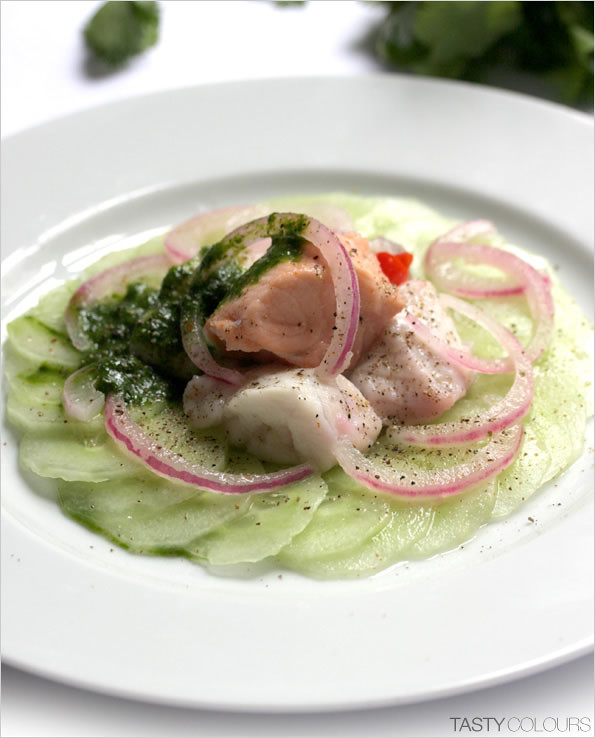
Today’s dish is far away from Central European traditions. I made this variation on Ceviche  several weeks ago, when my husband was in Warszawa. It is an extra refreshing starter or main dish for a hot summertime. I was hesitating to present it today, because again, the weather here in Kraków is far away not only from the tropics but from summertime in general. I should rather present Polish warming up barley soup, rich and savory Bigos or at least Aligot from Auvergne - my favorite region in France, except for Provence. But, at least theoretically there is a calendar summer. Perhaps in some places where some of you live, one suffers from sweltering heat and would enjoy having a few bites of this low fat and rich in proteins citrus-marinated seafood? I do not know about you, but except for fish tartar and sashimi it is one of my favorite seafood starters. Usually, during the week, I make a simplified and quick version of it with shrimps, which I marinade for a short time.

This time I “cooked” my fish for five hours. Despite the fact that the marinade is extremely acid, the fish, which changes its texture and color (like if it was cooked) keeps the flavor of the sea. Some advise a shorter “cooking” time – depending on the type of fish. I have never checked how much time a particular fish needs for “cooking”. Anyway, I was checking my fish, trying it every hour, and in my opinion, one or two hours for that size of cubes I cut the fish into, was not enough. However, we all have our preferences and the "cooking" time should be set accordingly.

I “cooked” the fish in quite a large amount of lime and lemon juice (the juice should cover the fish completely). As I mentioned it, the marinade itself is very acid, and in Peru it is served as a drink called "Tiger Milk". For me, it is too acid and I threw it away.  I also prepared on the side a simple dressing with the addition of some palm sugar, to balance the taste. You can experiment with other dressings, like for example this one that Cristina prepared, which I discovered just a few days ago. Check her recipe for dressing ; it sounds very appealing and I will definitely try it when I am back in Paris

I served it with cucumbers. You can add avocado (this is how I usually make the shrimp “Ceviche”) and cherry tomatoes or tomatoes. If you want to serve it as a full meal, add some tortilla chips on the side or some rice, or even potatoes. As regards herbs – feel free to experiment and use your favorite: chives, basil, scallions, mint or parsley (I used coriander like in the classical version). 

Serves 4

Ingredients:
200 g salmon, cut into 2-3 cm cubes (you can use any other sea fish, shells or shrimps)
200 g cod loin cut into 2-3 cm cubes
1 medium red onion, peeled, washed and cut into thin slices
3 limes
3 lemons
1 cucumber (around 300 g)
1-2 handfuls of coriander, finely chopped 
5-6 tablespoons olive oil (or as much as you want)
1 small red chili pepper, finely chopped (if you are tempted to have your Ceviche spicier, feel free to add as much as you can stand)
1 tablespoon palm sugar
Salt

Preparation:
Place the cubes of fish in a medium size bowl.
Cut lime and lemons into halves (wash them firstly, of course) and squeeze their juice. Pour the juice on the fish (it should be covered).  Add onions and chili, mix well. Cover the bowl with a plastic film and place it into the fridge for a few hours.
Once the fish is cooked, strain the juice. If you want to serve the marinade as Tiger Milk in small glasses, keep it. Or simply throw it away.
Peel cucumber and cut it into very thin slices.
In a mortar, mash coriander with some olive oil and sugar (if you do not have a mortar, simply mix those ingredients thorough fully). Add a bit of salt, to taste. You can add a tiny bit of sesame oil, too, if you like it.
Place the cucumber onto a plate then lay the cubes of fish with onion and chili. Pour the coriander dressing on top.
I did not add any accompaniment to this dish (as I wanted to enjoy the taste of the fish), but it will go deliciously of course with some cherry tomatoes cut into halves, avocado,  rice  and so on…


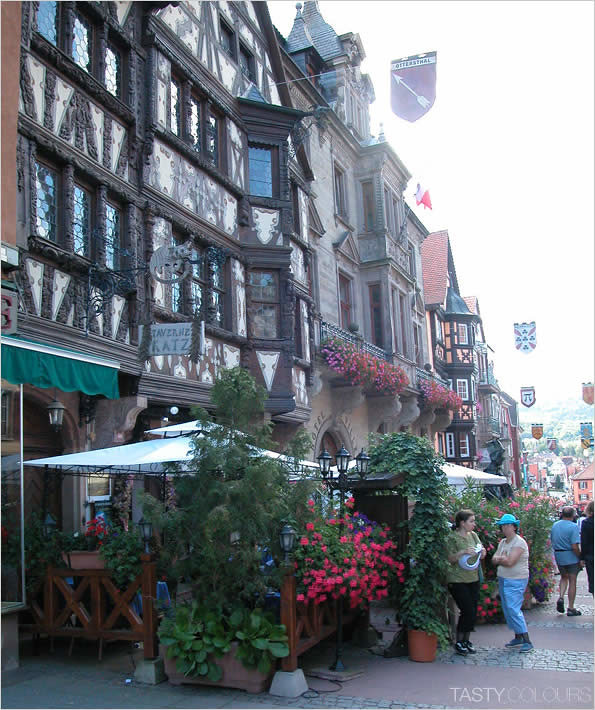
And at the end I present my 10th picture stored in my PC. Just before leaving Paris I was invited by Lidka to a bloggers’ play (nobody knows what it is about except for a fact that you should present the 10th picture from you computer).

So here it is – made in summer 2005, probably in Colmar, in Alsace, but I am not quite sure.

Now I invite Karolina.

Thursday, June 17, 2010

From a Snob to Foodies – with Love

A couple of weeks ago one of my friends, sipping wine at three o’clock in the morning, made a joke that we were snobs because we live in the sixth arrondissement in Paris. I am not going to explain why do we live here, except for the fact that, by chance, we found this nice (although tiny) apartment for a price lower to those offered in theoretically less snobbish and less expensive Parisian neighbourhoods. But as a theoretical snob I prepared for you a short guide of some foodie places (but not restaurants) that I recommend to visit in our snobbish neighbourhood.


1. For foodies crazy about organic food,

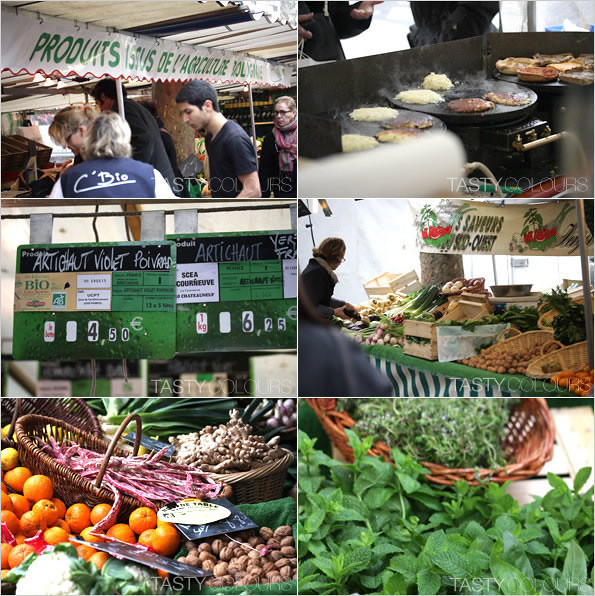
A posh organic food market at Boulevard Raspail. This market is famous especially amongst American and Japanese tourists. If you are there around noon, it is very probable that in the crowd you will hear people speaking English and Japanese rather than French. The vendors do not protest about having pictures taken as they are used to foreigners and their cameras. Be prepared to see some famous actors and bobos, and so on. There is a wide range of organic vegetables, fruits, herbs, milk products, cheeses, fish, vegetarian and vegan dishes; meat, dried fruits, beauty products, wines, olive oils and so on. Some genuine Parisians do not advise to do your shopping there, as allegedly certain vendors sell identical products on the regular food market taking place exactly at the same place on Tuesdays and Fridays, but for less money. I do not believe it is entirely true though. Be aware of pickpockets. Before you start your shopping, I advise you to buy and taste some “Potato Pancakes with Gruyere” sold by two guys who have their stall close to Rue du Cherche-Midi. Eating a fat and warm potato pancake before you start shopping will somehow cut your appetite and will prevent you from buying too many unnecessary, though appealing products (one disadvantage: the long line and the guys are absolutely slow).


2. For meat lovers,

A charming place to visit is an artisan butcher shop, or rather a tiny elegant boutique in retro style of Mr Jean-Pierre Bajon located at 29 rue de l’Abbé Grégoire, between rue de Vaugirard and rue du Cherche-Midi. This nice guy, who has a smile of a Hollywood star, sells top quality meat, poultry, hams, sausages and “produits traiteurs”. “Everything’s natural here” he told me once.  Not only they will slice your meat like a masterpiece, but will also indicate its perfect cooking time and temperature. In addition, one can place special orders. Do not be surprised if you bump into some ex Prime Minister there doing his shopping. In plus, Bajon has a sentiment for Polish people, as two of his interns were from Poland. If you are lucky, you can try his products during “degustations” organized outside his shop. Be cautious when taking pictures, as sometimes Mr Bajon gets a bit tired of his fame and complains about cameras... More about Mr Bajon in one of my coming posts.

If you like old fashioned meaty preparations, you should visit Gilles Verot, the famous traditional charcuterie located at the beginning of rue de Notre-Dame-des-Champs. His sales staff will help you to discover the classics of traditional French charcuterie. I already was mentioning this guy here. Famous for his traditional “Fromage de Tête” for a certain time now, Verot’s charcuterie products can also be found in New York City, in the trendy Bar Boulud on Broadway. Try his rillettes and terrines, too.


3. For amateurs of culinary news, trends and gadgets,
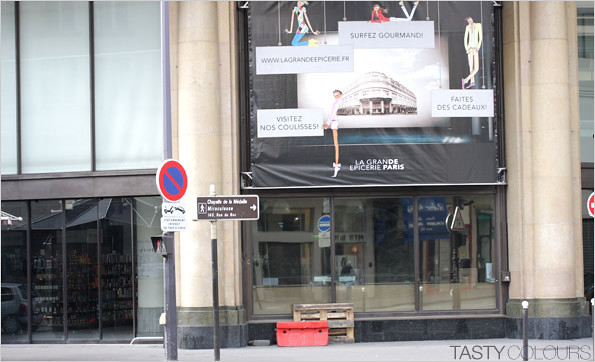
La Grande Epicerie de Paris, 24, rue de Sèvres. It is a large grocery store and it is said to be one of the best in Paris. It will provide you with a great collection of expensive and fancy products. If you want to buy some culinary eatable gadgets for your friends, like funny cookies, fancy fusion soups in jars and cartoons, chocolates, fancy sauces, coffee, tea, spices and foie gras, it is a perfect place to spend 200 € and to leave the store with just a small shopping bag (by the way, Clotilde, the author of “Chocolate and Zucchini” lately wrote that “Parisian grocery stores may hide themselves in comparison to what one can find in Japanese ones”).
I like this shop for its outstanding wine selection at reasonable prices, for example, but on the other hand it becomes more and more mysterious to me why, when I search for a particular item, I do not find it there. That was the case with Italian flour for Italian pasta, Italian cotecchino sausage and graham crackers. They have, however, a great “Traiteur” department, which will provide you with prepared food items from all parts of the World. The Italian corner is good (but why don’t they have this pasta flour - was I mentioning this already?). I never buy fish there (as it is much more money than on the food market), meat (Mr. Bajon is better and besides, their meat department sales persons are masters in ignoring clients); cheese (our “fromager” at the food market is better and cheaper). Be aware that taking pictures is not allowed there.
Further, keep in mind that you actually will get more for your money when shopping on Tuesday or Friday mornings on the market boulevard Raspail. And the quality there is unbeatable.


4. For fans of pastries,

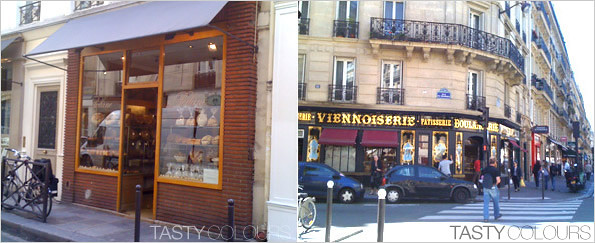
Gérard Mulot pastry shop at the corner of rue de Seine and rue Lobineau (close to boulevard Saint-Germain). This well known, although not glamorous, shop is always open on Sundays. We go there to buy their excellent “pain au levain”, which reminds me of Polish breads. Usually I am so hungry that I also take a “Sandwich Club”, which I eat on my way back home. Gerard Mulot does very good macarons but the range of products is much wider: bread and viennoiseries, savoury items like quiches and tarts, salads, sandwiches, chocolate, ice cream and absolutely fabulous cakes.  Mulot is not as a media-friendly person as Pierre Hermé and his shop is more discreet than for example “La Pâtisserie des Rêves”, which is a new pastry / concept store.

Pierre Hermé at 72, rue Bonaparte: what can I say. Mr Hermé is one of the most famous pastry chefs in France. Everybody should love him and his products. I do not have such a taste for ultra sophisticated confections and I tend to prefer more simple and hearty classical pastries. Besides, although his macarons are quite excellent, I have found my favourite, macaron au caramel et beurre salé, somewhere else…But once in Paris, visiting one of his shops is a must.

La Pâtisserie des Rêves: at 93, rue du Bac (in the 7th arrondissement, actually). This is a new concept of pastry shop opened by the very famous Pastry Chef Philippe Conticini. The place was already a legend before its opening in September 2009 as numerous articles in the Press and on the web prepared Parisian foodies to rush there. Old fashioned, or rather, classical cakes have endured a huge lifting (or plastic surgery?).They are displayed under glass cloches. Whoever wishes to follow trends in pastries should visit this place and try one of their confections.

Ladurrée at 21, rue Bonaparte. I believe I do not have to introduce them. Famous for their macarons, which I like a lot, the rest of the products, in my opinion, do not always offer the same quality. In particular, their millefeuilles look nice but do not taste as deliciously as they appear.

For fans of bread,

Gérard Mulot mentioned above. Try his “pain au levain”, which reminds Polish breads.

Pain Poilâne at 8, rue du Cherche-Midi. Probably the most famous Parisian sourdough bread; you can buy a whole loaf or just a few slices. Try their delicious small rustic apple tarts and croissants. You can “steal” one or two small “sables” (cookies) which are always waiting for you by the cash desk. Following the sudden death of Lionel Poilâne, his daughter, Apolonia, has been running the business. Right next door, the company opened a small Tartine & Wine bar, which is packed like sardine cans during lunch time (despite the fact that their chairs are not comfortable).

Eric Kayser at 18, rue du Bac (at the corner of rue de Verneuil). Baker and Pastry Chef, Eric Kayser is internationally known and operates several shops abroad (Japan, Russia, Greece, Ukraine and so on). His buckwheat bread and baguettes are very good.

Small boulangerie at the corner of rue de Mézières and rue de Rennes: This is my favourite daily bakery shop. Great baguette tradition and excellent pain brioché to accompany foie gras. “They have gold in their hands”, as my husband uses to say. Always a line.


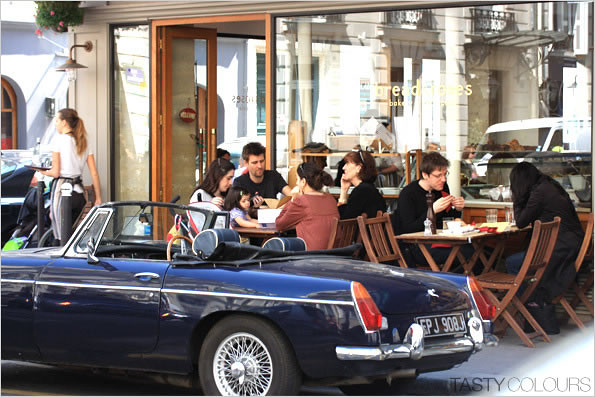
Bread & Roses, a bakery (selling organic breads), lunch restaurant (tarts, quiches and salads) and small grocery store close to the Luxembourg Garden, at 7, rue de Fleurus.

Friday, June 11, 2010

Bye Bye Paris, and Welcome to Kraków


I would like to apologize to my first subscribers that the e-mail subscription to my blog does not work properly. We will try to fix it as soon as possible; however we are leaving to Kraków tomorrow (we will spend there a good few weeks). 1,600 km of driving in front of us, and depending on the weather and traffic, we should arrive there in one or two days.
Before I get my internet connection in Kraków, a few days will probably have passed so I will reactivate my blog only by the end of next week.
You will find new recipes, some culinary reviews from Paris, in particular a photo-reportage and an interview with one of the most famous Parisian artisanal butcher shops, the great Monsieur Bajon in the Sixth Arrondissement!
I also invite you to check some news from the International Festival of Jewish Culture, which will take place at the end of June in Kraków.

Take good care, people !

Friday, June 4, 2010

Dumplings (Pierogi) with Lamb, Morels and Demi-Glace


“Following a recipe is like building a house without adequate foundations, architectural plans or professional builders. In the dark”.
Michael Booth, “Sacre Cordon Bleu. What the French know about cooking”

Around 2 years ago in one American bookstores in Paris (Village Voice), I found a book, the title of which caught my eyes straight away:  “Sacré Cordon Bleu. What the French know about cooking”  by Michael Booth, a travel writer and journalist. Michael had moved to Paris to study at Le Cordon Bleu,  after having burnt all cookbooks except for Ma cuisine of Auguste Escoffier's. This intelligently, very informative, non pretentious and funnily written book describes his culinary adventures in Paris and in this cooking school. He decided to study the Culinary Art Program, after numerous failures in following cookbooks’ recipes which did not help him to acknowledge techniques and had not empowered him to cook.

Do you share this opinion that, if you strictly follow a recipe, you have a great chance of failure to burn your meat, to dry out your chicken in the oven, to spoil your crème patissière and to overcook your risotto? But in particular, as regards complicated preparations and complex dishes, cookbooks are even less helpful; because they fail to explain the recipe exactly at the moment where a problem starts (it is the same with books for lawyers usually). Why it is that, beginner cooks so often complain about their failures when following cookbooks’ recipes? In my case, the biggest practical knowledge I gained comes from my husband, who, when he was younger, spent years as a cook and a pastry chef in French restaurants in Los Angeles and New York City. He taught me such obvious and non obvious things like to put a dump paper towel under your cutting board once you chop and slice; he showed me professional cutting techniques and some preparations; he supervised me on how to organize your working table and kitchen without making a mess (although, still, it does not always work) and he gave me lessons of homemade veal stock, for example.

Those few ideas that Michael Boot gives in the introduction to his book, are remarkable.
“…The failings of recipe books are inevitable; however it is not the writers’ fault.
Most cookbooks are written with the best intention at heart, usually by highly skilled cooks, and their recipes are properly tested, but how can Jamie Oliver possibly know the exact condition, size, ripeness, tenderness or colour of the ingredients you will be using?
How they can know how efficient your oven is or how cold your fridge is? How they can know how thick your frying pan is, or the quality of meat you are using?
How do they know temperature of your kitchen, or whether you like to cook with a window open, that your Kenwood has seen better days and doesn’t quite whisk the gusto it once had, or that your grill is so caked in grime  that it can barely muster half the heat it ought to?...
….And these are merely the issues that plague the well – written, thoroughly tested recipe books. What about all those cobbled together recipes in the back of women’s magazines and the Sunday supplements, or those dodgy posting on the Internet, on blogs and notice boards that many home cooks have started to use more and more?
Some times recipes do work, of course, but those occasions are, I suspect, more to do with a blessed alignment of the culinary planets than any rigorous intent on the part of the cookbook writer. But even when recipes do work, cookbooks rarely, if ever, empower you to cook. It took me years of harrowing kitchen failures to realize that this, but a proper cook knows techniques rather than formulas; a proper cook can look at a plate of raw ingredients and conjure an infinite repertoire of dishes. A proper cook, I eventually convinced myself, needs just one cookery book: Auguste Escoffier’s Ma cuisine…”

And as regards today's recipe: at the beginning of my blogging experience I wrote about Pierogi and I presented two popular and rustic versions of this dish: a savory cheese-potato-onion version “Pierogi Ruskie” and a sweet version  "Pierogi with Bilberries".

The Pierogi concept, or rather the idea (like Italian raviolis, for example), has endless opportunities for experiments with various stuffing. But during decades of a communism regime we could only “enjoy” their more simple rural versions. Pierogi with meat fillings are one of the most common versions and you will find them in nearly every food shop (frozen or cooked), fast food bars at gas stations, cantinas and restaurants. Pork meat is often used for stuffing, but beef and veal are used as well. However you can use any type of meat you desire: chicken, turkey, duck, lamb. You may even use fish as well. Traditionally, meat is firstly baked or cooked (you can use leftovers from dinner), and then grind it before stuffing. When I was a teenager, I called Pierogi with meat “a review of a week”. One could never be sure what type of meat leftovers had been used for stuffing in a school cantina or a low quality bistro at a railway station.

For a long time, I had in my mind the idea of Pierogi stuffed with lamb’s meat (easy to buy in France) and served with fresh morels (or at least, frozen ones - those one can find in every Picard store). So when the morel season started last month and when I saw those fresh mushrooms at our food market on boulevard Raspail, I agreed to ruin my daily food budget and decided to buy a small quantity of them (because they are so expensive, if I remember well, around 120 € per kilo). The season for fresh morels is short. That’s why you can use frozen or dried ones (dried morels can be reconstituted by soaking them in water). Eventually, you can experiment with other forest mushrooms.

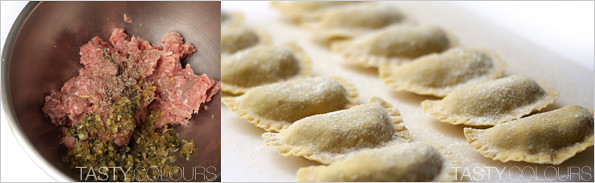
This time, instead of preparing my Pierogi the traditional way, I stuffed my dumplings with raw, ground meat, the way Russian Pelmeni are done. The main reason for doing so was that I wanted to avoid spoiling this delicious lamb meat by cooking it twice.

We served them with a homemade Demi-Glace  (I will share with you this great recipe in one of my following posts).  I realize that veal stock is a kind of preparation that it is difficult to make at home (for example, in some countries you will not get any veal bones in any store) and those industrial powdered stocks are hopeless. The authentic, homemade veal stock itself may not be very interesting in taste. But what is fascinating about it, once you combine it with other flavors, like for example, the juice from these lamb’s pierogi, it becomes something absolutely outstanding. If you do not have homemade veal stock, feel free to use just mushrooms, some extra melted butter, some more fresh thyme and some hard, grated cheese (I used some Oscypek, but every hard,  sheep’s cheese, will be good). You can serve them eventually just sprinkled with some fresh, chopped mint, if you do not like mushrooms.

Dumplings (Pierogi) with Lamb, Morels and Demi-Glace

Serves 4 (makes between 30-40 Pierogi depending on their size)

Ingredients:
500 g ground raw lamb meat
3-4 medium shallots, peeled and finely chopped
2 garlic cloves, peeled and finely chopped
2 tablespoons fresh thyme
200 g fresh morels (optionally, you can use dried or frozen)
50 g grated Oscypek or any other hard, salty sheep’s cheese (optional)
200 ml homemade veal stock (optional)
3 tablespoons olive oil
2 tablespoons butter
Salt
Pepper

Preparation:
Start with the preparation of morels. Clean them delicately, wash them and dry them out with a paper towel.
In a hot frying pan, add olive oil and fry shallots, after five minutes add garlic and thyme and fry until gold on a medium flame. Mix often and do not let them burn.
Put aside.
In a bowl, mix lamb’s meat with fried shallots, garlic and thyme. Salt and pepper.
Mix everything delicately and taste.
Put the filling aside and, in the meantime, prepare pierogi dough as described in the basic recipe. You can roll out the dough a bit thicker (you will stuff your Pierogi with raw meat and they have to be cooked a bit longer than normally).
Once Pierogi are ready for cooking, put them aside (be careful, they should not stick to each other) and cover them with a dish towel (so they will not dry out).
In a large saucepan, bring to a boil 4 liters of water and add a bit of salt.
In the meantime, in a hot frying pan, melt butter and add a bit of olive oil. Fry mushrooms on a quite high flame, until gold.
Pour the veal stock into a small saucepan and reduce it to around 2/3 of its volume. To intensify the stock’s flavor, you can put one or two morels into it few minutes before the end of reduction.
Once your sauce and mushrooms are ready, add Pierogi (but remove the table cloth, of course) into boiling water (10 to 15 pieces at a time). Cook Pierogi about for 5 minutes. The best way to check whether the meat is cooked is to take one dumpling and simply taste it.
Serve immediately with the warm veal stock and morels, sprinkled with a bit of grated cheese. These Pierogi also taste wonderful when grilled for a few minutes after cooking.

Cost:
Lamb – 11 €
Morels – 24 €
Remaining ingredients (flour, eggs, thyme, shallot, garlic, a bit of cheese) - 2 €
Veal stock – we had some in stock in our freezer (anyway, you do not buy bones in France, you get them for free)
Related Posts Plugin for WordPress, Blogger...